
Wedding Cocktail Hour Entertainment Ideas Your Guests Will Love in Australia
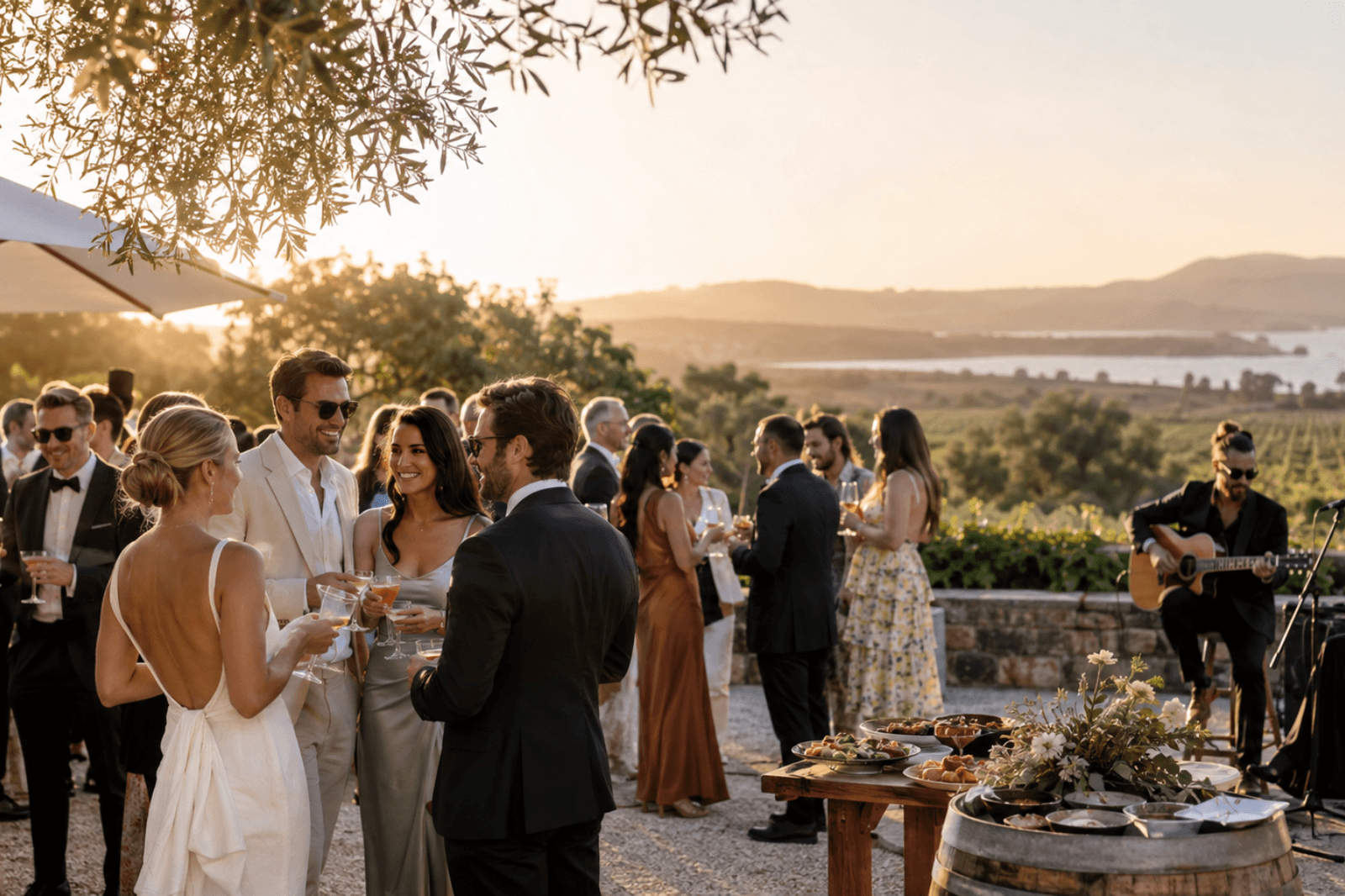
Wedding cocktail hour entertainment should give guests something enjoyable to hear, watch or join while still leaving plenty of room for conversation. Live musicians, roaming entertainers, artists, photo experiences, food stations and relaxed games all work well because guests can enjoy them at their own pace.

Wedding cocktail hour entertainment should give guests something enjoyable to hear, watch or join while still leaving plenty of room for conversation. Live musicians, roaming entertainers, artists, photo experiences, food stations and relaxed games all work well because guests can enjoy them at their own pace.
Cocktail hour often falls between the ceremony and reception, which is also when the couple may be away taking photos. Thoughtful wedding entertainment helps this part of the day feel like a real part of the celebration rather than a pause before dinner.
The trick is not to fill every corner with an activity. Choose entertainment that suits your venue, your guests and the type of atmosphere you want to create.
What to Remember
Live music works well when you want guests to talk while still enjoying the atmosphere.
Roaming entertainers are useful when people are spread across a large venue.
Artists and photo experiences give guests something they can take home.
Food and drink can become part of the entertainment when guests can watch it being prepared.
Most weddings only need a small mix of music and interaction during cocktail hour.
Live Music for a Relaxed Cocktail Hour

Live music is one of the easiest ways to shape the mood without asking guests to stop what they are doing. People can listen while they catch up with friends, meet relatives or enjoy their first drink after the ceremony.
The style you choose will depend on the venue and the tone of the wedding.
Acoustic Soloist or Duo
A singer with a guitar, piano or a second musician suits garden weddings, wineries, coastal venues and intimate receptions.
Acoustic music has enough presence to stop the space from feeling quiet without dominating the room. Familiar songs also work well because guests can recognise them without needing to gather around a stage.
An acoustic duo can add more depth while keeping the same relaxed feel. Guitar and vocals are common, though piano, percussion or violin can work just as well.
Jazz Trio
A jazz trio suits hotel lounges, private estates, heritage venues and stylish indoor receptions.
Piano, double bass and saxophone can sit comfortably behind conversation. Couples who want something less traditional can ask for jazz arrangements of modern pop songs alongside classic standards.
String Musicians
A violinist, cello duo or string quartet can suit a formal wedding without making cocktail hour feel too serious.
Strings also give couples plenty of choice. Classical pieces can sit alongside film music and modern love songs, which helps the set feel personal without changing the character of the instruments.
Cocktail-Hour DJ
Choosing the right DJ works especially well when you want more control over song choice or plan to continue with dancing later in the evening.
Cocktail hour can begin with soul, funk, disco, lounge music or relaxed pop before moving into higher-energy tracks after dinner.
If you are deciding between live musicians and recorded music, Mivida's guide to choosing between a DJ and a band explains how each option can suit a different style of wedding.
Roving Entertainment That Moves With Your Guests
A fixed stage is not always the right fit for cocktail hour. Guests may be moving between a terrace, lawn, bar area and indoor space, so entertainment that travels through the crowd can work especially well.
Roaming Saxophonist
A saxophonist can move between groups rather than staying in one spot.
This works well at larger venues where guests are spread across several areas. The performer can spend a few minutes with one part of the crowd, then move on without asking everyone to gather in the same place.
A roaming saxophonist can also work with a DJ if you want live instrumentation over selected tracks.
Roaming Violinist
A roaming violinist gives you the same freedom of movement with a softer sound.
Acoustic violin works well in gardens and heritage venues, while electric violin can suit contemporary city weddings.
The musician can move between guest groups during drinks and canapés, creating small moments without interrupting conversation across the whole venue.
Close-Up Magician
Close-up magic is well suited to cocktail hour because it happens in small groups.
A magician can move between tables or standing groups and perform short routines with cards, coins or borrowed objects. Guests can watch for a few minutes, then return to their conversation.
This is also useful when many guests are meeting for the first time. A short magic routine gives a group something to react to and talk about without forcing anyone into a formal activity.
Mentalist
A mentalist can bring a different style of interaction through predictions, observation and audience participation.
Short routines work better than long demonstrations during cocktail hour. Guests should be able to watch, join in and move on without feeling that they are missing part of a larger show.
Stilt Walkers and Circus Acts
Stilt walkers, jugglers and mobile circus artists can work at larger weddings, outdoor venues and festival-style celebrations.
They create strong visual moments and can move through the venue rather than needing a dedicated stage.
Before booking, check ceiling heights, ground surfaces and access routes. A performer on stilts needs open, stable space and enough clearance to move safely.
If you are considering this style of entertainment, Mivida's guide to roving entertainment explains how mobile acts work during guest arrivals, drinks and other social parts of an event.
Roving Dancers
Roving dancers can bring a burst of movement into cocktail hour without turning it into a full dance show.
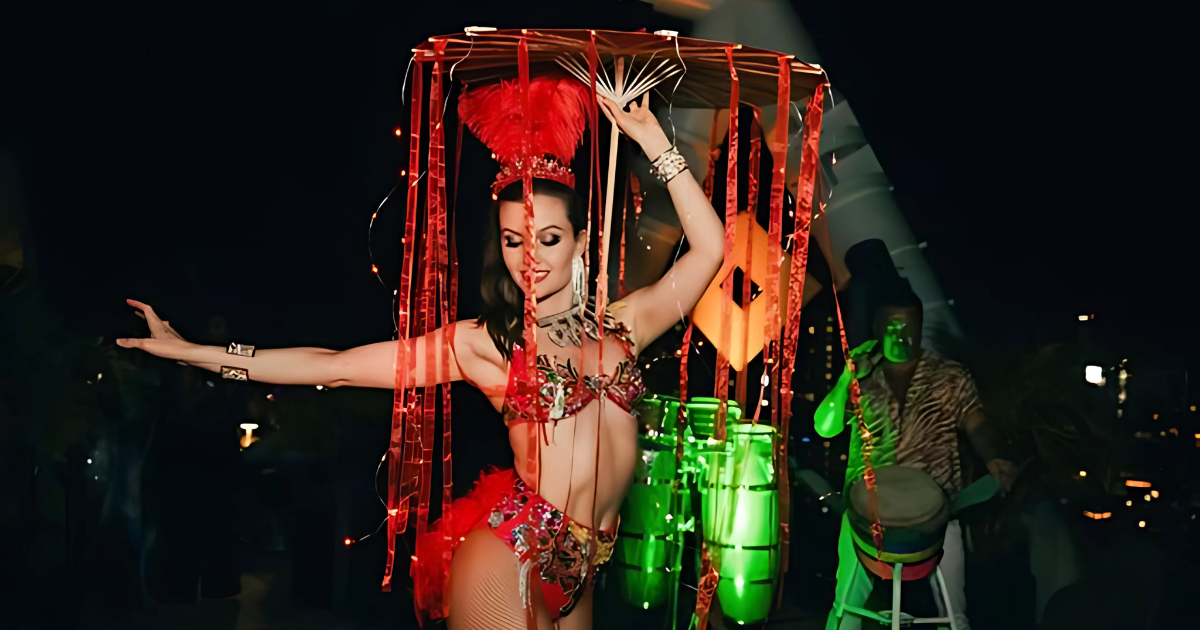
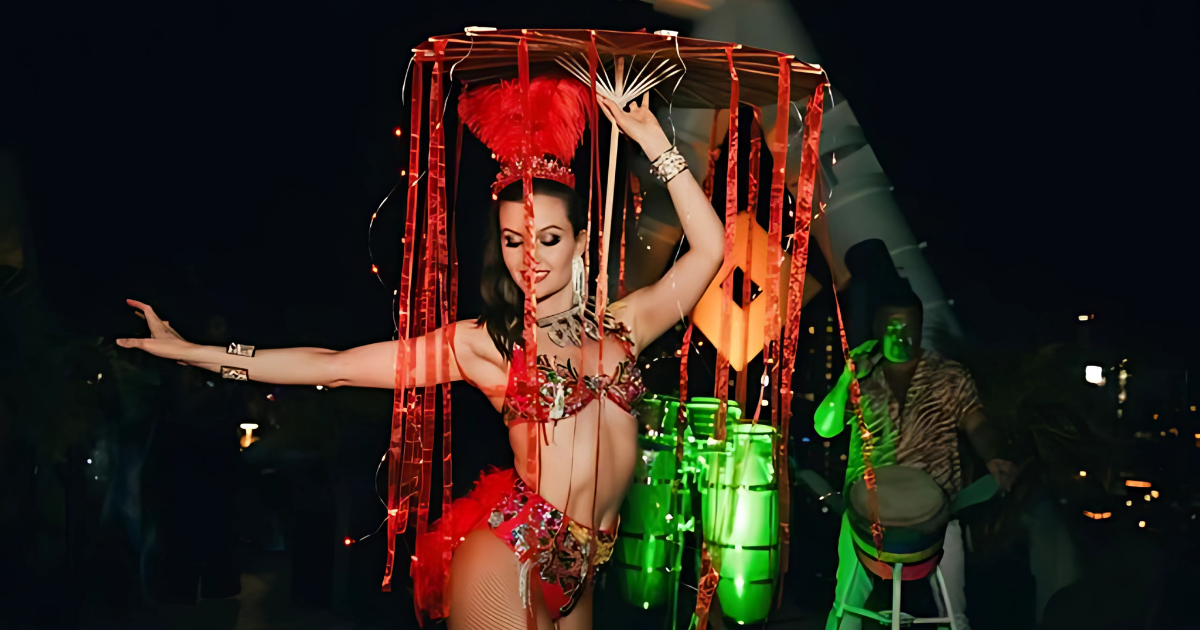
Latin dancers, samba performers and other cultural dance acts can move through the crowd, perform a short routine and invite interested guests to join for a few steps.
This works best when participation stays optional. Guests who want to watch can enjoy the moment without feeling pressured to join.
Surprise Singing Waiters
Singing waiters begin as part of the service team before revealing themselves as performers.
The surprise works best once guests have settled into cocktail hour and received a drink. A short musical reveal can bring everyone together for a few minutes before the performers step back and regular service continues.
Live Art and Guest Keepsakes

Some couples prefer entertainment that also leaves guests with something to remember the wedding by.
Live artists work particularly well because people can watch the process as well as receive the finished piece.
Guest Illustrator
A guest illustrator can draw quick portraits of couples, friends and family members.
This can become a natural gathering point without needing loud music or a formal show. Guests can watch other portraits being drawn while waiting for their turn.
Ask the artist how many drawings they can complete in an hour. If your guest list is large, you may need more than one illustrator or a booking system to prevent long waits.
Caricature Artist
A caricature artist brings a more playful feel.
Guests receive a personal drawing while friends watch the portrait take shape. This suits relaxed weddings where the couple wants something light-hearted during drinks.
Place the artist away from the busiest service areas so waiting guests do not block the bar or food stations.
Live Wedding Painter
A live wedding painter works differently from a guest illustrator.
Instead of producing individual portraits, the artist paints one larger scene from the wedding. Guests can watch the canvas change throughout cocktail hour and return later in the evening to see the finished work.
The final painting becomes a keepsake for the couple rather than a favour for each guest.
Photo Entertainment Guests Can Join at Their Own Pace
Photo activities work well during cocktail hour because guests already understand what to do.
They can join when they feel like it, spend a few minutes taking photos and then head back to their group.
Photo Booth
A photo booth can suit almost any style of reception.
Open-air booths are useful for larger groups, while enclosed booths give guests more privacy. The backdrop and print design can match the wedding styling without becoming too elaborate.
Keep props simple so people can move through quickly.
Roaming Instant-Print Photographer
A roaming photographer removes the need for guests to line up at a fixed booth.
The photographer can move around the venue, take quick portraits and provide prints soon afterwards.
This can work well at weddings with several outdoor and indoor areas because guests do not have to leave their group to find the photo station.
Audio Guest Book
An audio guest book gives guests a different way to leave a message.
Place it somewhere away from speakers and busy service areas so recordings are easy to hear later.
A short prompt can help people decide what to say. Ask them to share a memory, a piece of marriage advice or a message for the couple to listen to after the wedding.
Food and Drink That Double as Entertainment
Cocktail hour already revolves around drinks and canapés, so turning part of the service into something guests can watch makes sense.
The main concern is speed. Any interactive station should keep people moving rather than creating a long queue.
Signature Cocktail Station
A bartender preparing a short menu of signature drinks can become part of the room's entertainment.
Guests can watch the drinks being mixed while choosing something that suits them.
Two or three cocktails usually make more sense than a long menu during a short cocktail hour. Alcohol-free drinks deserve the same care so non-drinkers are not left with an afterthought.
Live Oyster Shucking
Live oyster shucking suits coastal weddings, seafood lovers and venues with strong catering facilities.
Guests can watch each oyster being prepared before eating it straight away.
Speak with your venue or caterer about refrigeration, food handling and dietary needs before adding any live seafood service.
Grazing Carts
A mobile grazing cart allows food to move through the crowd rather than drawing everyone towards one table.
Cheese, antipasti, small savoury bites and desserts can all work this way.
This can be useful at large outdoor venues where guests are spread across lawns, terraces and seating areas.
Relaxed Activities for Outdoor Weddings
Not every entertainment idea needs a performer.
Sometimes guests simply need something they can pick up, play for a few minutes and leave when they are ready.
Lawn Games
Bocce, croquet, giant Jenga, ring toss and cornhole work well at garden, farm and winery weddings.
Choose only a few games and give each one enough space. Too many activities can make the lawn feel cluttered and may create problems for servers moving between guests.
Lawn games also work well for mixed-age guest lists because people can participate without needing special skills.
Wedding Trivia
Wedding trivia can work indoors or outdoors and needs very little space.
Questions can be about the couple, the venue or shared memories. Keep the game informal rather than turning it into a scheduled competition. This kind of activity can also work well at a wedding shower, where guests from different sides of the couple's life may be meeting before the wedding.
Small cards on cocktail tables are often enough to get people talking.
Collaborative Guest Artwork
A shared artwork gives guests something quiet to contribute to during the hour.
This might be a large canvas, a collection of small cards or another piece that guests can add to gradually.
It works well for couples who want a keepsake that includes contributions from friends and family without asking everyone to participate at once.
How to Choose the Right Cocktail Hour Entertainment

Start with your venue.
A small indoor room may suit an acoustic musician, DJ, magician or illustrator. A large lawn gives you more freedom for roaming musicians, circus performers and games.
Then think about how your guests usually socialise.
If most guests already know one another, music may be enough. If several friendship groups and families are meeting for the first time, a magician, illustrator or roaming act can give them an easy conversation starter.
Weather also matters for Australian outdoor weddings. Ask your venue what happens if rain, wind or heat changes the plan. Musicians may need cover, games may need to move indoors and performers may need a new route through the venue.
You do not need to book several acts to make cocktail hour feel full. One music choice paired with one interactive activity works well for many weddings.
Working with an agency can also make the booking process easier when you are comparing musicians, DJs and mobile acts. Mivida explains how an entertainment agency helps plan an event if you want to understand what that process looks like.
How Many Cocktail Hour Activities Do You Need?
For most weddings, one music option and one interactive idea are enough.
An acoustic duo with a guest illustrator gives you sound and a keepsake. A DJ with a magician gives you music and movement. A string duo with lawn games can suit a relaxed garden wedding.
Larger guest lists may need more than one activity if people are spread across separate spaces. Smaller weddings usually feel better with fewer choices because everyone shares the same atmosphere.
The venue itself may already provide plenty to enjoy. Good views, seating, drinks and canapés can carry much of the hour, leaving you free to book only one musician or roaming act.
Plan a Cocktail Hour Your Guests Will Enjoy
Cocktail hour does not need to feel busy to feel memorable. Give guests good music, comfortable places to talk and one or two things they can enjoy without interrupting the flow of the afternoon or evening.
At Mivida, we help couples find wedding entertainment that suits the venue, guest list and style of celebration. From musicians, bands and DJs to dancers, roving performers and circus acts, we can help you put together entertainment that feels right for the way you want your wedding to unfold.
Frequently Asked Questions
What is the best entertainment for a wedding cocktail hour?
Live music, roaming performers, close-up magicians, guest illustrators, photo booths, lawn games and interactive food stations are all good choices. The right option depends on the size of your wedding, your venue and how your guests like to socialise.
Do you need entertainment during cocktail hour?
No. Some weddings only need music, drinks and comfortable seating. Entertainment becomes more useful when the couple will be away for photos or when guests do not all know one another.
How long should cocktail hour entertainment last?
Most acts can work within the same period as your cocktail service. Musicians may play throughout, while magicians, dancers and roaming performers can appear for shorter sets.
What entertainment works well for an outdoor Australian wedding?
Acoustic musicians, roaming performers, lawn games, guest artists and mobile food stations work well outdoors. Always arrange a wet-weather alternative with the venue and entertainer.
Can cocktail hour entertainment work at a formal wedding?
Yes. Jazz musicians, strings, live painters, close-up magicians and portrait artists can suit formal venues while still giving guests something to enjoy between the ceremony and reception.
Should you have more than one entertainer?
Not always. One musician or DJ plus one interactive activity is enough for many weddings. Add more only when the guest count or venue layout makes it useful.

How to Choose the Right DJ for Your Wedding in Australia
The right wedding DJ understands weddings, matches your music taste, reads the room well, communicates clearly and knows how to manage the music, timing and technical side of your reception.

The right wedding DJ understands weddings, matches your music taste, reads the room well, communicates clearly and knows how to manage the music, timing and technical side of your reception.
A wedding DJ does much more than play a playlist. They set the mood as guests arrive, manage reception music around speeches and formalities, respond when the dance floor changes and help the night move at the right pace. Working with an event entertainment agency can also help you find a DJ whose style and approach suit the wedding you have planned.
If you want to choose the right DJ, start with the atmosphere you want your guests to remember. The music, personality, venue setup and way the DJ handles the room should all support that vision.
What to Know Before You Book
Choose a professional wedding DJ with real reception experience.
Make sure their music range suits both you and your guests.
Confirm whether they will also act as your Master of Ceremonies.
Ask about ceremony audio, the sound system and spare equipment.
Speak with the person who will actually DJ your wedding before you book.
Start With the Wedding You Want
Your wedding style should guide your DJ search.
Think about the kind of reception you want before comparing wedding DJ hire options. Do you picture a packed dance floor for most of the night? Would you rather have relaxed music during dinner before moving into a shorter party set? Are you planning a formal reception with introductions, speeches and a first dance, or something more casual?
Also think about the parts of the celebration that happen away from the dance floor. If you want guests engaged during arrivals, drinks or breaks between formalities, thoughtful cocktail hour entertainment ideas can help keep the atmosphere lively without taking attention away from the DJ.
The same approach can work for pre-wedding celebrations, where the right mix of wedding shower ideas can help guests mingle and enjoy the event naturally.
Guest numbers also change what you need. A small restaurant wedding calls for a different setup from a large ballroom reception. The same is true when your guest list covers several generations or brings together different cultural backgrounds.
Write down a few details before you contact DJs:
Wedding date and venue
Approximate guest numbers
Ceremony and reception locations
Music styles you enjoy
Songs or genres you do not want
Cultural or family traditions
Whether you need a DJ and MC
How much of the reception you want devoted to dancing
You do not need a complete wedding playlist. You only need enough information to tell whether the DJ understands the celebration you are planning.
Choose Wedding Experience, Not Just DJ Experience
A strong club DJ is not automatically the right wedding DJ.
Wedding receptions have pauses, formalities and timing changes that do not happen during a club set. A DJ may need to cue the wedding party entrance, lower the music for speeches, wait while the photographer finishes a shot and then bring guests back onto the dance floor.
Ask how often the DJ works at weddings and what happens during their planning process.
They should ask about your music preferences, entrance songs, first dance, do-not-play list, reception schedule and wedding venue.
Venue familiarity can help, but it should not decide the booking. A good DJ can work at an unfamiliar venue by checking access, power, setup times, sound restrictions and speaker placement before the wedding.
If you are deciding between different types of wedding entertainment, Mivida's guide to choosing between a DJ and a live band can help you compare how each option changes the reception.
Match the Music to You and Your Guests
The best wedding reception music should sound like your wedding, not someone else's standard set.
Give your DJ a clear sense of what you enjoy. A short list of artists, genres and favourite songs usually tells them more than a huge playlist.
Share:
Must-play songs
Do-not-play songs
First dance music
Entrance songs
Cultural music
Favourite artists
Genres you enjoy
Genres you would rather avoid
Then ask how much freedom they prefer once the reception begins.
This is where crowd reading matters. Your DJ needs to watch how guests react and adjust the music without ignoring the brief you gave them.
A song that looks perfect on a playlist may not work at that moment. Another track might unexpectedly bring parents, friends and grandparents onto the dance floor together.
That ability to react is one of the biggest reasons couples choose professional wedding DJ hire instead of relying on a fixed playlist.
You can also read Mivida's guide to how a professional DJ can shape the mood and flow of a wedding reception.
Decide Whether Your DJ Will Also Be the MC

A DJ can also act as the Master of Ceremonies (MC), but playing music and hosting a reception call for different skills.
The MC may welcome guests, announce the wedding party, introduce speeches, call attention to the first dance and let everyone know when another part of the reception is about to begin.
Ask whether MC duties are included in your DJ package.
You should also decide how much personality you want on the microphone. Some couples enjoy an outgoing host who talks with the crowd. Others want short announcements with very little microphone time.
Listen to how the DJ speaks during your consultation. They should sound comfortable and natural without dominating the conversation.
If you are booking one person as both DJ and MC, make sure you like both sides of their style.
Make Sure the DJ Works With Your Venue
The DJ's equipment needs to suit your wedding venue, guest numbers and room layout.
Ask where they plan to set up and what equipment they will bring.
Discuss:
Speakers
Wireless microphones
DJ equipment
Dance floor lighting
Ceremony audio
Power requirements
Setup time
Outdoor areas
Venue sound limits
Public liability insurance
Australian wedding venues may have their own rules for outside suppliers, sound levels and access times. Ask your DJ whether they will speak with the venue before the wedding to confirm these details.
Ceremony audio deserves extra attention if the ceremony takes place in another area. You may need a separate sound system for music and microphones.
The same applies if drinks, dinner and dancing happen in different spaces. Moving one setup around during the wedding may not work.
Ask About Backup Equipment and Replacement Plans
A professional wedding DJ should have a clear answer when you ask what happens if something goes wrong.
Start with the equipment.
Ask whether they bring spare cables, another music source, extra microphones or other backup equipment that can keep the reception going if something fails.
Then ask what happens if the DJ becomes sick or cannot attend.
If you book through a larger company, another DJ may be available. If you book an independent performer, ask whether they have another wedding DJ they trust to step in.
The replacement process matters too.
A substitute should receive your wedding playlist notes, first dance song, do-not-play list, running order, MC instructions and any other information discussed during planning.
You should not be trying to explain your wedding music to a replacement DJ on the day itself.
Confirm Who Will Actually DJ Your Wedding
Do not assume the person who answers your enquiry will also be the person behind the DJ booth.
Entertainment companies may work with several DJs. That is not a problem as long as you know how the performer is chosen.
Ask whether you can confirm your DJ before booking.
If the company assigns someone later, ask how they match DJs with couples. Music taste, wedding style, guest mix and MC preferences should all play a part.
You should also speak directly with the assigned DJ before the wedding.
Use the Consultation to Choose the Right DJ
A DJ consultation should tell you how the person thinks, not just what is included in the package.
Notice what they ask you.
A professional wedding DJ should want to know about your guests, venue, music taste, reception schedule, cultural requirements and the atmosphere you want.
Ask what they would do if:
The dance floor suddenly becomes quiet
A guest asks for a song on your do-not-play list
Speeches run late
Your first dance timing changes
Guests respond better to another style of music
You are looking for sensible answers and good judgement.
Reviews can help too. Look for comments about communication, song selection, flexibility, MC duties and the DJ's ability to read a crowd.
Video footage can give you another useful view. Listen to how the DJ uses the microphone and watch how smoothly they move between songs.
Set Rules for Song Requests
Guest song requests can be fun, but you should decide how much influence they have over the reception music.
Some couples are happy for guests to request almost anything. Others want the DJ to accept requests only when they fit the music brief.
Tell the DJ your preference before the wedding.
Your do-not-play list should still apply. A guest should not be able to override a song you specifically asked the DJ to avoid.
You can also tell the DJ whether certain family members or members of the wedding party can request changes.
This gives the DJ clear boundaries while leaving enough freedom to respond to the dance floor.
Read the Agreement Before You Book
Before confirming wedding DJ hire, make sure the written agreement matches what you discussed.
Check:
Wedding date
Venue
Start and finish times
Assigned DJ
MC duties
Ceremony coverage
Sound system
Lighting
Setup arrangements
Overtime conditions
Cancellation terms
Replacement procedure
Payment schedule
If something affected your decision to book, make sure it appears in writing.
That includes requests for a named DJ, separate ceremony audio, extra microphones or a second setup in another area of the venue.
When Should You Book Your Wedding DJ in Australia?

Start looking for your wedding DJ after you confirm your wedding date and venue.
Popular Saturdays can fill well ahead of time, especially when you want a DJ with a particular music style or strong wedding experience.
You do not need to have every song chosen before making the booking.
At this stage, the DJ mainly needs your date, venue, approximate reception times and a general picture of what you want. You can work through the detailed wedding playlist and formal songs closer to the day.
Starting early also gives you time to speak with several DJs rather than choosing whoever happens to be available.
Choose a DJ You Can Trust With the Reception
Learning how to choose the right DJ comes down to more than music taste. You need someone who understands weddings, communicates well, works comfortably with your venue and can make sensible decisions while the reception is moving.
Think about which DJ listened closely to your plans and gave you clear answers. Consider how they would fit with your guests, how they would handle your wedding reception music and whether you trust them to change direction when the room calls for it.
The right DJ should give you confidence that the music, announcements and dance floor are in capable hands, leaving you free to enjoy the celebration.
At Mivida, we help couples find DJs and performers who fit the venue, guest mix and atmosphere they want to create. Whether you want a relaxed reception, a full dance floor or live entertainment alongside your DJ, our team can help you narrow down the options.
Share your wedding date, location and entertainment plans with Mivida, and we can help you find a DJ who feels right for your celebration.
Frequently Asked Questions
Is a DJ worth having at a wedding?
A DJ can be a good choice when music and dancing are a major part of your wedding reception. They can react to the crowd, handle song requests, manage formal music and change direction when the mood shifts. A fixed playlist cannot respond to the room in the same way.
How far in advance should you book a wedding DJ in Australia?
Start looking once your date and wedding venue are confirmed. Popular Saturdays and sought-after DJs can book earlier than quieter dates, so beginning the search early gives you more choice.
Can a wedding DJ also be the MC?
Yes. Many wedding DJs also provide MC services. Ask what their MC duties include and make sure you are comfortable with their speaking style. You can also hire a separate MC if you want the DJ to focus only on the music.
Do wedding DJs take song requests?
Most wedding DJs can take guest requests, but you decide the rules. Tell the DJ whether they can accept requests freely or only when a song fits your music brief. Your do-not-play list should always take priority.
How many songs should you give your wedding DJ?
You do not need to choose every track. Give the DJ your must-play songs, do-not-play list, first dance, entrance music and a selection of artists or genres you enjoy. Leave enough room for the DJ to respond to your guests.
What equipment should a wedding DJ provide?
A wedding DJ will usually bring DJ equipment, speakers and a microphone for the reception, depending on the package. Dance floor lighting and ceremony audio may also be included. Confirm the full equipment list before booking so you know what the DJ and venue each need to supply.
Wedding Shower Ideas & Planning Guide: Games, Activities & Entertainment
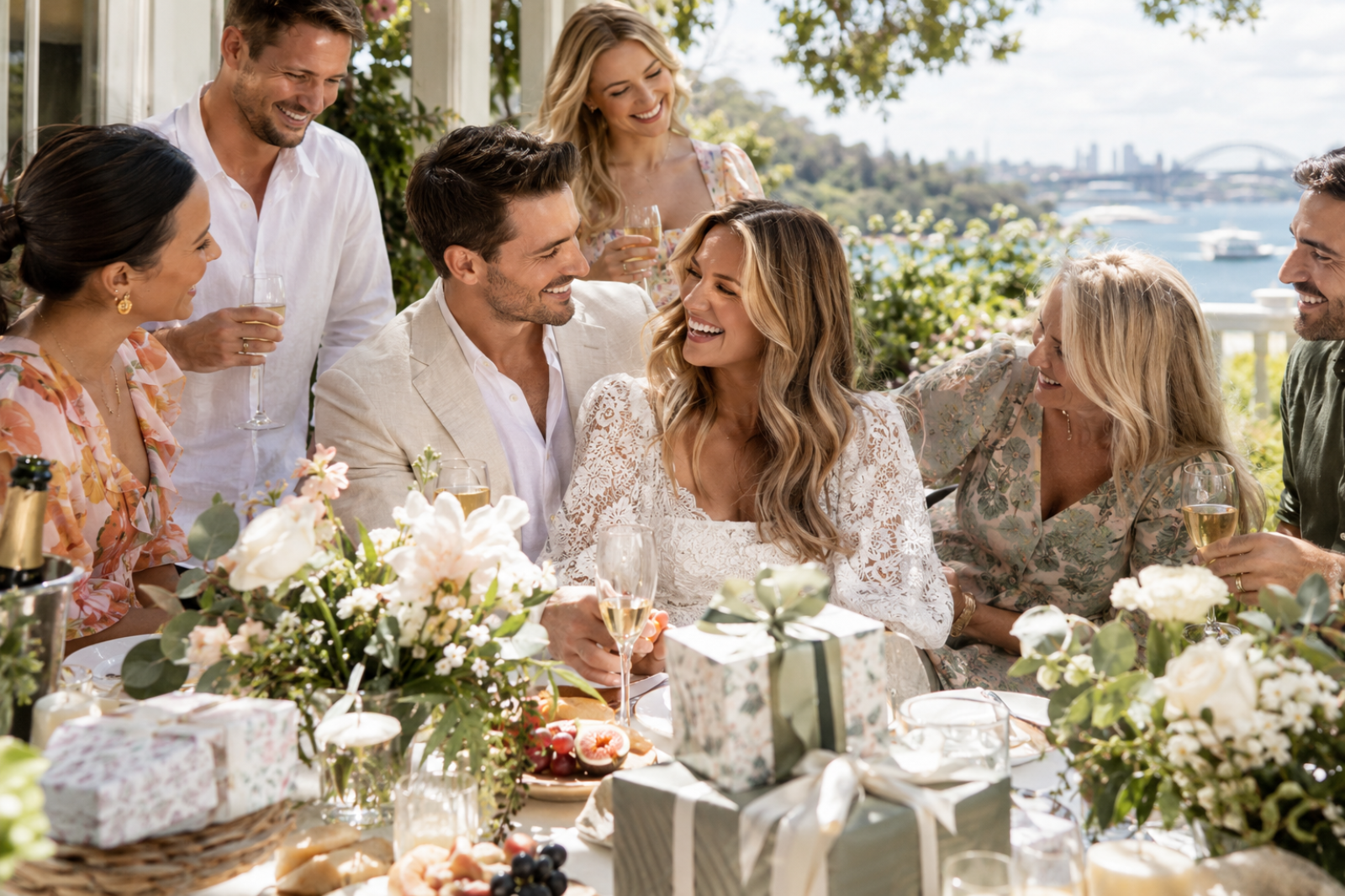
A wedding shower is a pre-wedding celebration for both partners, bringing their friends and families together for food, gifts, games and shared entertainment before the wedding day.

A wedding shower is a pre-wedding celebration for both partners, bringing their friends and families together for food, gifts, games and shared entertainment before the wedding day.
Unlike a traditional bridal shower, a wedding shower celebrates the couple together. Guests can come from both sides of the relationship and of any gender, which gives the event a more social, inclusive feel. In Australia, that might mean a backyard lunch, restaurant gathering, garden party or relaxed afternoon event with thoughtful wedding entertainment woven into the day.
The aim is simple: give the couple and the people closest to them a chance to celebrate together before the wedding without trying to recreate the wedding reception itself.
What to Know Before You Plan
A wedding shower celebrates both partners, not only one person.
Invite close friends and family from both sides of the couple.
Two or three organised games are usually enough.
Build the food, activities and entertainment around the couple's shared interests.
Leave plenty of room for conversation, photos and casual social time.
What Is a Wedding Shower?

A wedding shower, sometimes called a couple’s shower, is a gathering held before the wedding to celebrate both people getting married.
Friends and family usually come together over food and drinks, with gifts, games or entertainment included depending on the couple's preferences.
This is what separates it from a bridal shower.
A bridal shower traditionally centres on the bride and often has a female guest list. A wedding shower places both partners at the centre of the celebration and opens the guest list to their wider circle of friends and relatives.
That difference should influence the whole event.
The invitations should feature both partners. Games should focus on their relationship rather than one person's wedding experience. Gifts should suit their shared home, lifestyle or future plans. Entertainment should also feel suitable for the whole group.
A wedding shower can be especially useful when the couple shares many friends or would rather bring both families together before the wedding instead of holding separate pre-wedding gatherings.
Who Hosts a Wedding Shower?
A close friend, sibling, relative or member of the wedding party can host the wedding shower.
Two or more people can also host together, which helps spread the cost and planning work.
The couple can have input into the guest list, preferred date and type of celebration without having to organise every detail themselves. Hosts should speak with both partners early so the event reflects them equally.
Before booking anything, agree on:
The approximate budget
Who is paying for what
The guest list
Preferred dates
Whether gifts will be part of the event
Food and dietary needs
The general mood of the celebration
Whether games or professional entertainment will be included
Clear decisions at the start make the rest of the planning far easier.
Who Should You Invite?
A wedding shower usually includes people who have a genuine relationship with one or both members of the couple.
That may include siblings, parents, cousins, members of the wedding party, close friends, mutual friends and relatives from both families.
Because both partners are being celebrated, resist the urge to build the list mainly from one person's social circle.
A good test is to look at the room on paper. Does it feel like a gathering for the couple, or does one side heavily outweigh the other?
It is also sensible for wedding shower guests to be people who will be invited to the wedding. Asking someone to attend a gift-focused pre-wedding event without including them in the wedding itself can create an awkward situation.
When Should You Hold a Wedding Shower?
A wedding shower is commonly held in the months leading up to the wedding.
Choose a date that gives the couple breathing room before the wedding itself. Avoid crowding the shower into a weekend already filled with fittings, venue meetings or other celebrations.
For Australian couples with relatives travelling between cities or regional areas, it can help to schedule the shower around a weekend when the largest number of close family members can attend.
The time of day can shape the entire event.
A late-morning shower works well with brunch. An afternoon gathering suits grazing food, drinks and garden games. An early-evening shower can lean more towards cocktails, live music and a relaxed party atmosphere.
Choose a Wedding Shower Style That Suits Both Partners

The wedding shower should feel connected to the couple rather than to a generic wedding theme.
Start with what they already enjoy doing together.
A couple who loves hosting friends may enjoy a backyard lunch with lawn games and a live acoustic musician. Food lovers might prefer a long lunch or shared feast. A couple who enjoys going out may prefer a cocktail-style event with a DJ or roaming entertainment.
Possible Australian wedding shower styles include:
Backyard barbecue and lawn games
Coastal picnic
Garden lunch
Restaurant long lunch
Brewery or winery gathering
Cocktail afternoon
Grazing-table party
Rooftop event
Trivia night
Live music gathering
You do not need a highly decorative theme. A setting, food style and entertainment plan can give the shower enough personality on their own.
Set the Budget Before Booking
Work out how much the hosts are comfortable spending before choosing a venue or performers.
The largest costs are usually food, drinks, venue hire and entertainment. Decorations, printing, prizes and gifts can then fit around those expenses.
A home or backyard event can leave more room in the budget for catering or music. A restaurant may cost more per person but remove the need to hire tables, glassware or staff.
If performers will be part of the event, think about planning entertainment while choosing the venue. Space, sound limits, access and the timing of food service can all affect which type of act suits the shower.
Wedding Shower Invitations
Wedding shower invitations should make it obvious that the event celebrates both partners.
Include both names prominently rather than presenting the shower as an event for only one person.
The invitation should cover:
Both partners' names
Date and start time
Venue and address
RSVP date and contact
Dress code if there is one
Gift or registry details if relevant
Any theme guests need to know about
If the event includes something guests should prepare for, such as lawn games, swimming or an outdoor setting, mention that as well.
How Many Wedding Shower Games Should You Have?
One to three organised games will suit most wedding showers.
The point is not to turn the event into an afternoon of constant competitions. Games work better when they break up the day and give people from different sides of the couple's life a reason to interact.
A useful mix is:
One mingling game: Something guests can join soon after arriving.
One couple game: An activity centred on the relationship.
One casual group game: Something people can play while talking, drinking or moving around the venue.
If everyone is already getting along, skip the extra game and let the party continue naturally.
Wedding Shower Games for Couples and Mixed Groups

The strongest wedding shower games involve both partners or make it easy for different friendship groups and generations to join.
The Wedding Shoe Game
Sit the couple back-to-back.
Each partner holds one of their own shoes and one belonging to their partner. The host asks questions such as:
Who takes longer to get ready?
Who is more likely to organise a spontaneous weekend away?
Who made the first move?
Who is most likely to forget where they parked?
Each person raises the shoe belonging to the person they think fits the answer.
Guests can see whether the couple agrees, which usually creates plenty of laughs without making the game difficult.
How Well Do They Know Each Other?
Ask one partner a set of questions before the event and record the answers.
At the shower, ask the other partner to guess how they responded.
Swap roles for a second round so both people get equal attention.
Use questions about travel, food, habits, first dates and shared experiences rather than anything likely to embarrass someone in front of relatives.
Where Were They?
Choose photos of the couple from holidays, dates or memorable occasions.
Number the images and ask guests to guess where each photo was taken.
This works particularly well for couples who travel often, and the photos can double as decoration around the venue.
Who Knows the Couple Best?
Create a short trivia round covering both partners.
Questions might cover where they met, their favourite takeaway, the first concert they attended together or who proposed.
Playing in teams helps relatives, workmates and friendship groups mix rather than staying in separate circles.
Couple Bingo
Create bingo cards using things connected with the couple, such as favourite foods, travel destinations, hobbies, pets or memorable moments.
It can run quietly during another part of the shower rather than stopping the whole event.
Lawn Games
Outdoor wedding showers suit games such as giant Jenga, bocce, quoits or backyard cricket.
These work particularly well for Australian garden, park or backyard events because guests can join when they feel like it.
They also give people something to do between food service and organised entertainment.
Wedding Shower Activities That Are Not Games
Not every activity needs a score or winner.
Some of the most memorable wedding shower moments come from things guests create for the couple.
Date-Night Jar
Give guests cards and ask them to write down a date idea.
Suggestions could range from fish and chips by the beach to a weekend road trip or dinner at a favourite restaurant.
The couple takes the jar home and works through the ideas after the wedding.
Shared Advice Cards
Ask guests to write advice, wishes or funny observations for the couple.
Avoid framing this as marriage instruction from people who may not want to give advice. Prompts such as "A wish for your future together" or "Something you should always make time for" feel warmer.
Couple Photo Guestbook
Set up an instant camera and a guestbook.
Guests take photos throughout the shower and add them beside handwritten messages.
By the end of the event, the couple has a finished keepsake rather than another pile of loose cards.
Food or Drink Experience
A cocktail-making session, wine tasting, shared barbecue or guided food experience can become the main shower activity.
Choose something both partners enjoy rather than building the event around only one person's tastes.
Group Dance or Music Session
A short salsa class, percussion session or similar experience can work well with an outgoing group.
Participation should stay optional so guests can watch without feeling pushed onto the floor.
Wedding Shower Entertainment Ideas

Entertainment can give the shower a clear atmosphere while still leaving plenty of room for conversation.
Live Musicians
An acoustic duo, guitarist, pianist or small band suits arrival drinks, lunch and early afternoon gatherings.
Live music works especially well when guests will spend much of the event sitting, eating and talking.
DJ or Live Band
For a larger shower or an evening celebration, music can become a bigger part of the event.
Choosing a DJ or live band depends on the size of the venue, the couple's music taste and whether dancing will be part of the plan.
A DJ offers a broad song selection in a relatively compact setup. A live band brings more of a performance feel.
Roving Entertainment
Roving performers move through the event and interact with guests rather than asking everyone to face a stage.
That format can suit cocktail-style showers, larger venues and events where friends and relatives are moving between different spaces. Many of the same cocktail hour entertainment ideas can also work well when you want guests to mingle while still having something engaging happening around them.
Interactive Performers
Magicians, musicians and other interactive acts can help guests from different social groups start talking.
This works especially well when both families are meeting properly for the first time.
Food and Drinks for an Australian Wedding Shower
Food should match the time of day and the way guests will use the venue.
A seated restaurant shower may suit a shared lunch. A backyard event might have a barbecue, grazing table or catered platters. An afternoon cocktail-style shower can work with canapés and smaller dishes.
Popular options include:
Grazing boards
Barbecue food
Shared platters
Finger food
Brunch dishes
Seafood
Wood-fired pizza
Mini desserts
Cake or cupcakes
Include alcohol-free choices alongside beer, wine, sparkling wine or cocktails.
Guests should be able to enjoy the shower comfortably whether they drink alcohol or not.
Wedding Shower Gifts and Registries
Gifts remain a common part of wedding showers, although the format is flexible.
Because the shower celebrates both partners, gifts should reflect their shared life.
That could include homewares, cooking equipment, outdoor items, travel accessories, experiences or contributions towards something the couple is saving for.
Australian couples may also use a wishing well or registry rather than asking guests to choose physical gifts.
Put gift information on the invitation only when the couple has decided what they are comfortable receiving.
Should the Couple Open Gifts During the Shower?
Gift opening is optional.
Some couples enjoy opening gifts with everyone there. Others would rather spend that time talking with their guests.
If the guest list is small, opening presents can feel personal and relaxed. If dozens of people are attending, it may take a large part of the event.
When gifts are opened publicly, ask someone to keep a note of who gave each item so thank-you messages are easier later.
A Simple Wedding Shower Timeline
A three-hour wedding shower gives people enough time to arrive, eat and enjoy the event without forcing the afternoon into a rigid schedule.
| Time | What Happens |
|---|---|
| 1:00 pm | Guests arrive, drinks and mingling |
| 1:30 pm | Food is served |
| 2:00 pm | Couple game or trivia |
| 2:25 pm | Live entertainment, lawn games or activity |
| 3:00 pm | Gifts, photos or casual social time |
| 3:30 pm | Dessert and messages for the couple |
| 4:00 pm | Farewells |
Treat the timing as a loose framework.
If guests are enjoying lunch or a performer has everyone engaged, there is no need to stop simply because another activity was scheduled.
Wedding Shower Ideas on a Smaller Budget
A wedding shower can feel generous without becoming expensive.
A backyard, park or family home removes venue hire. Shared platters can cost less than a formal meal. Digital invitations keep stationery spending low.
Use the couple's photographs as decoration. Choose one organised game rather than buying several game packs. Put together a playlist for part of the event and spend the entertainment budget on one live act.
Lawn games borrowed from friends can fill the afternoon without adding much cost.
Spend where guests will notice it most: food, comfort and the atmosphere of the event.
Prizes and Guest Favours
Prizes can be simple.
Chocolate, coffee, candles, small vouchers or local food products suit a mixed guest list.
Favours are not required.
If the event already includes something guests can take home, such as a photo, small flower arrangement or item from an activity, there is little reason to add another gift.
Make the Wedding Shower Feel Like Their Celebration
A wedding shower works because it brings both sides of the couple's life into one room before the wedding.
Keep both partners at the centre of the planning. Choose games about their relationship, food they both enjoy and entertainment that fits the way they like to celebrate. Then leave enough unplanned time for friends and families to meet, talk and enjoy being together.
At Mivida, we connect couples and hosts with standout wedding entertainment across Australia, including live musicians, bands, DJs, roving performers and interactive acts. Whether the plan is a laid-back backyard shower, a long lunch or a larger celebration with dancing, we can match the event with performers who suit the venue, guest list and atmosphere.
Turn the wedding shower into a celebration both partners will remember. Get in touch with us and find entertainment that brings the whole room together.
Frequently Asked Questions
Is a wedding shower the same as a bridal shower?
No. A wedding shower celebrates both partners and usually includes guests of any gender. A traditional bridal shower centres on the bride.
Who is invited to a wedding shower?
Close friends and family from both sides of the couple are usually invited, along with members of the wedding party and mutual friends.
Who pays for a wedding shower?
The host or group of hosts usually covers the cost. Friends or relatives may share expenses when several people organise the event together.
How many games should a wedding shower have?
One to three organised games are enough for most events. Choose activities centred on the couple and leave plenty of time for food and conversation.
Do guests bring gifts to a wedding shower?
Gifts are common, but the couple can choose a registry, wishing well, experience contributions or no gifts at all. The invitation should make the arrangement clear.
What entertainment works well at a wedding shower?
Live musicians, DJs, bands, roving performers, lawn games and interactive experiences can all work well. Choose entertainment that suits both partners, the venue and the mix of guests.

How to Budget for a Wedding: Smart Ways to Cut Costs Without Sacrificing the Celebration
Saving money on a wedding does not have to mean choosing the cheapest option for everything. The better approach is to decide what matters most to you, whether that is the venue, food, photography, or wedding entertainment, spend confidently in those areas, and reduce costs on details that will have little effect on your overall experience.

Weddings can become expensive surprisingly quickly. A venue upgrade here, another dozen guests there, and a few seemingly small extras can add thousands of dollars to the final bill.
Saving money on a wedding does not have to mean choosing the cheapest option for everything. The better approach is to decide what matters most to you, whether that is the venue, food, photography, or wedding entertainment, spend confidently in those areas, and reduce costs on details that will have little effect on your overall experience.
Here are practical ways to lower your wedding costs while still planning a celebration that feels thoughtful, personal, and complete.
1. Set Your Maximum Budget Before Booking Anything
Before touring venues or contacting vendors, decide how much you are genuinely comfortable spending.
Include contributions from family members only after confirming exactly how much they intend to contribute.
Once you have your total, divide it into categories and leave some money unallocated for unexpected expenses.
A budget is much easier to follow before contracts start arriving.
2. Decide on Your Top Three Priorities

Not every part of the wedding needs the same budget.
Sit down with your partner and individually choose the three things that matter most to you.
Perhaps yours are photography, food, and the venue. Your partner may care more about music, drinks, and having everyone you love in attendance.
Compare your lists and spend more intentionally on the things that will genuinely shape your experience.
3. Reduce the Guest List
Few decisions affect a wedding budget as much as the number of people attending.
Each additional guest can increase spending on:
Food
Drinks
Invitations
Tables and chairs
Linen
Centrepieces
Favours
Transport
Venue capacity
Instead of cutting several small details to save money, removing 10 or 20 guests can sometimes make a much larger difference.
4. Consider an Off-Season Wedding Date
Popular wedding months tend to command higher prices because venues and vendors know demand is strong.
Ask venues whether they offer different rates during quieter months.
An off-season wedding can sometimes allow you to book the venue or vendor you really want without paying peak-season pricing.
5. Get Married on a Friday or Sunday
Saturday is usually the most desirable wedding day, which can also make it the most expensive.
Friday and Sunday weddings may come with lower venue minimums or more flexible packages.
Weekday weddings can provide even greater savings if your guest list is small or primarily local.
6. Choose a Venue That Includes More
A low venue hire fee does not automatically mean the venue is inexpensive.
One venue might charge less upfront but require you to separately hire:
Chairs
Tables
Glassware
Cutlery
Linen
Lighting
Sound equipment
Another venue may include all of those within its package.
Compare the total cost rather than the advertised hire price.
7. Hold the Ceremony and Reception in One Location
Using separate venues can mean paying for additional transport, decorations, staffing, equipment hire, and setup.
Holding everything in one location simplifies the logistics and can remove several expenses entirely.
It also makes the wedding easier for guests.
8. Ask Every Vendor What Is Included
When comparing quotes, do not look at the headline price alone.
Ask vendors whether their rates include taxes, setup, pack-down, delivery, travel, overtime, gratuities, equipment, and staffing.
A $2,000 quote that includes everything may ultimately be cheaper than a $1,600 quote followed by $800 in additional fees.
9. Compare Packages Before Choosing À La Carte Options
Some venues and vendors offer bundled packages that combine services at a lower overall rate.
But packages only save money when you actually want what is included.
Calculate the cost of purchasing each service separately before assuming the bundle offers better value.
10. Simplify the Menu
You do not necessarily need five appetisers, three main courses, multiple sides, and a midnight buffet.
A smaller menu can still feel generous when the dishes are well chosen.
Ask your caterer which menu combinations offer the strongest balance between guest experience and cost.
11. Consider Buffet or Family-Style Service
A formal plated dinner can require more service staff and additional coordination.
Depending on your caterer, buffet or family-style service may be less expensive.
Always compare actual quotes, though. The least expensive format varies depending on the menu, venue, and staffing requirements.
12. Be Strategic With the Bar
An unlimited premium open bar is not your only option.
You could serve:
Beer and wine
Beer, wine, and two signature cocktails
A limited selection of spirits
Drinks during specific reception hours
Ask your venue or bartender how different packages affect the total cost before choosing.
13. Skip Champagne for Every Guest
You do not necessarily need a dedicated Champagne pour just because there will be a toast.
Guests can raise whatever drink they already have.
If Champagne is important to you, reserve it for a special moment rather than automatically pouring a glass for everyone.
14. Turn a Few Details Into Experiences
When deciding what deserves a place in your budget, look for elements that guests can actually experience rather than décor they may barely notice.
For example, a Champagne tower or sabrage moment can act as both a visual centrepiece and part of the celebration, while spending on wedding entertainment, such as live musicians, a caricaturist, or an interactive performance, can create an experience guests are more likely to remember.
Spending becomes easier to justify when one element serves more than one purpose.
15. Use Seasonal Flowers
Flowers that are naturally abundant around your wedding date may be easier for your florist to source.
Instead of requesting one exact flower variety, explain the colours and overall style you want and let your florist recommend seasonal alternatives.
Flexibility can go a long way.
16. Repurpose Ceremony Flowers
Flowers used for the ceremony do not have to disappear once the vows are finished.
Ask your florist whether arrangements can be moved to:
The sweetheart table
Bar
Cake table
Welcome table
Lounge
Reception entrance
One arrangement can serve two parts of the wedding.
17. Use Greenery, Candles, and Lighting Strategically
Every table does not need an elaborate floral centrepiece.
Candles, greenery, bud vases, and thoughtful lighting can create atmosphere without requiring large arrangements throughout the room.
Focus your floral budget where guests will notice it most.
18. Skip Decorations Your Venue Already Provides
Before buying signs, candleholders, easels, arches, table numbers, or decorative stands, ask the venue what you can use.
Many venues have collections left from previous events or basic décor included in their packages.
There is little reason to buy something you'll use for a few hours when an acceptable version is already available.
19. Be Selective About DIY Projects
DIY does not automatically mean inexpensive.
Materials, tools, printing mistakes, replacements, and your time all have value.
DIY works best for manageable projects such as:
Place cards
Welcome signs
Simple favours
Table numbers
Be cautious about taking on large floral arrangements, complicated installations, or hundreds of handmade items shortly before the wedding.
20. Use Digital Save-the-Dates
Printed stationery involves more than the cost of paper.
There can also be envelopes, printing upgrades, postage, addressing, and international mailing expenses.
Digital save-the-dates allow you to reserve your stationery budget for the invitation itself if printed invitations are important to you.
21. Keep the Invitation Suite Simple
You probably do not need multiple enclosure cards if your wedding website already contains travel information, accommodation, directions, dress codes, and FAQs.
A streamlined invitation suite can reduce printing and postage costs while still giving guests everything they need.
22. Buy Wedding Attire With Alterations in Mind
The price on the dress or suit is not necessarily the final price.
Alterations can become a significant additional expense, particularly when major structural changes are required.
When comparing outfits, ask about expected alterations and factor them into your overall clothing budget.
23. Borrow or Reuse Accessories
Not everything you wear needs to be purchased specifically for the wedding.
Family jewellery, shoes you already own, a borrowed veil, cufflinks, or other meaningful pieces can reduce costs while making your outfit more personal.
24. Skip Favours Guests Are Likely to Leave Behind
Wedding favours can be lovely, but they are not mandatory.
If the item is likely to be forgotten on the table, consider putting that money elsewhere.
If you do want favours, choose something consumable, useful, or personal enough that guests will actually take it home.
25. Ask One Question Before Every Upgrade
Wedding planning comes with endless opportunities to upgrade.
Premium chairs. Speciality linen. More flowers. Custom glassware. Additional signage. Upgraded invitations.
Before saying yes, ask:
Will this noticeably improve our wedding experience?
If the answer is no, keep the money.
Small upgrades become expensive when you make dozens of them.
Where Should You Spend More on a Wedding?
Saving money does not mean reducing every category.
Spend more on the things that would genuinely disappoint you if they were compromised.
For one couple that may mean excellent photography. For another, it may mean inviting more relatives or serving exceptional food.
The goal is not to create the least expensive wedding possible. It is to make sure the money you do spend goes towards the parts of the celebration you actually value.
Where Can You Cut Wedding Costs Without Guests Noticing?
Some of the easiest areas to simplify include excessive signage, elaborate invitation inserts, expensive favours, unnecessary décor upgrades, extra floral installations, and premium hire items.
Guests are much more likely to remember whether they were comfortable, well fed, welcomed, and able to enjoy themselves than whether you upgraded the napkins.
FAQs
What Is the Best Way to Save Money on a Wedding?
Reducing the guest list is one of the most effective ways to lower wedding costs because guest count affects several expenses at once, including catering, drinks, hire items, stationery, and venue requirements.
What Are the Biggest Wedding Expenses?
Venue and hire costs, catering and drinks, photography, décor, flowers, and music commonly account for substantial portions of a wedding budget. The exact proportions vary based on location, guest count, and the couple's priorities.
How Can I Have a Beautiful Wedding on a Smaller Budget?
Choose a few areas where you want to make an impact and simplify everything else. A beautiful venue, thoughtful lighting, good food, and a few intentional details can often create a stronger overall experience than spending on dozens of smaller upgrades.
Is DIY Always Cheaper for Weddings?
No. DIY projects still require materials, equipment, time, and sometimes replacement supplies when something goes wrong. Compare the actual DIY cost with professional pricing before committing.
How Much Extra Money Should I Leave in My Wedding Budget?
Avoid allocating every dollar at the beginning. Keep part of the budget available for unexpected expenses, final guest-count changes, alterations, vendor fees, and last-minute necessities.
When Should You Start a Wedding Budget?
Ideally, establish your budget before booking major vendors. Knowing your spending limit early makes it easier to compare venues, determine a realistic guest count, and avoid committing too much money to one category.
Plan a Wedding That Reflects What Matters Most

A thoughtful wedding budget is not about cutting every possible cost. It is about spending intentionally on the details that will make the celebration meaningful to you and your guests. Prioritise what matters most, look for savings elsewhere, and leave enough flexibility for unexpected expenses along the way.
If memorable entertainment is one of your priorities, Mivida Events & Entertainment can help bring the celebration to life with professional wedding entertainment tailored to your event. From live musicians to interactive experiences, the right entertainment can turn part of your wedding budget into moments your guests will remember long after the celebration ends.
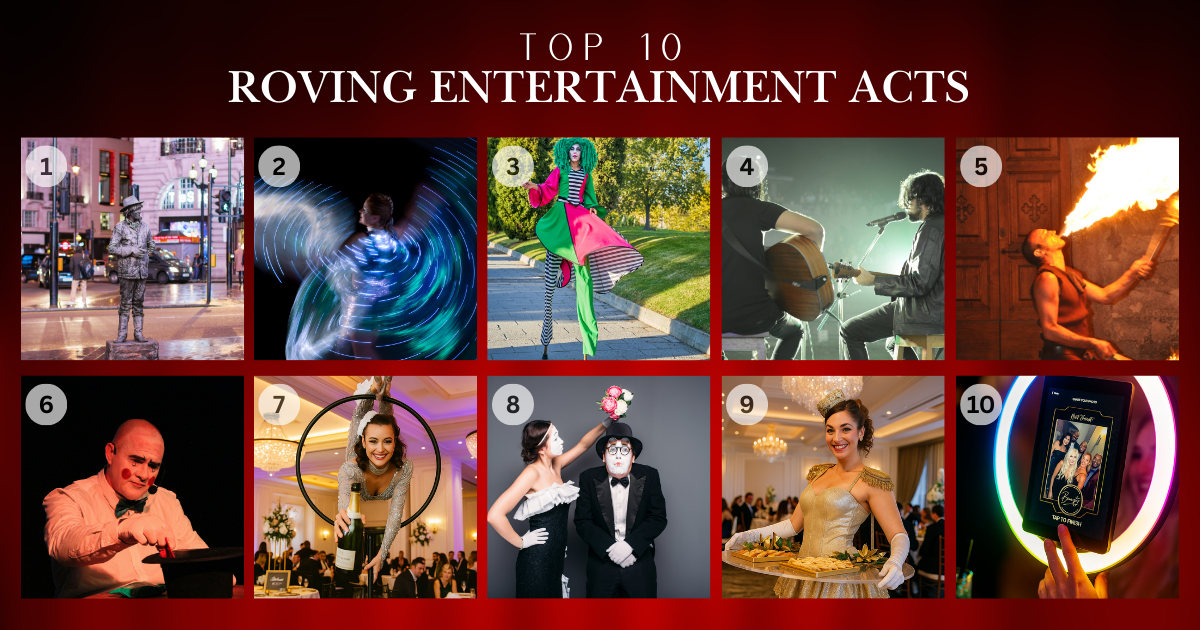
Top 10 Roving Entertainment Acts That Guests Will Talk About for Weeks
Roving entertainment brings interactive, mobile performances like fire jugglers, LED dancers, and living statues that energize weddings, festivals, and corporate events. By choosing acts that match your audience, theme, and budget, you can create unforgettable experiences that guests will talk about long after the event ends.
Traditional stage performances have their charm, but today’s events call for something more dynamic and immersive. Working with an experienced event entertainment agency can help you create memorable experiences that keep guests engaged from start to finish. Roving entertainment delivers that spark, bringing interactive, mobile performances directly to your guests. From weddings to product launches, these acts weave excitement into every corner of your celebration, leaving behind memories that linger well after the event ends.
How to Choose the Right Roving Entertainment for Your Event
Choosing roving entertainment isn’t just about picking what looks cool, it’s about creating an experience that fits seamlessly into your event’s flow and vibe. Working with professionals can also simplify planning a memorable event, especially when coordinating several performers, timings and venue requirements.
Understand Your Audience: Are you entertaining corporate professionals? Families with children? A nightlife crowd? Your guest list should influence the tone and interactivity of your performers.
Match the Theme and Venue: An elegant black-tie event pairs beautifully with champagne aerialists, while a colourful street festival might call for stilt walkers and drummers.
Budget and Duration: Roving acts can be flexible, offering short sets or multiple walkabouts. Factor in both your timeline and your entertainment spend.
Timing is Everything: Think about high-traffic moments, guest arrival, cocktail hour, transitions between courses or speeches.
Double the Fun: For larger events, consider booking two complementary acts. The contrast keeps things fresh and the energy consistent.
The Top 10 Roving Entertainment Acts That Steal the Show
1. Living Statues That Surprise and Delight
There's something timelessly fascinating about a figure that seems frozen in time, until it winks, bows, or offers a flower. Living statues blur the line between art and audience.
Best for: Outdoor festivals, corporate events, garden weddings
Why Guests Love It: The surprise element never fails. People lean in for a closer look, only to be startled (in the best way) by a subtle move or clever gesture.
2. LED Dancers and Glow Performers
When the lights go down, these artists light up. From futuristic LED acts to energetic Brazilian dancers, movement-based performers can instantly lift the atmosphere and encourage guests to engage with the entertainment.
Best for: Night events, galas, product launches
Why Guests Love It: It’s a hypnotic mix of movement, music and colour. Plus, it makes for incredible social media content.
3. Stilt Walkers in Themed Costumes
With towering height and exaggerated charm, stilt walkers command attention from every corner of a venue. Their elaborate costumes bring character to life.
Best for: Parades, large-scale venues, kids' parties
Why Guests Love It: They make great first impressions and incredible photo ops, especially when guests walk in.
4. Roving Musicians and Acoustic Duos
Sometimes, it’s the soft strum of a guitar or a smooth saxophone weaving through the crowd that adds soul to your celebration. For events that also include dancing later in the evening, deciding between a DJ and a live band can help shape the overall mood and energy.
Best for: Weddings, beach ceremonies, cocktail hours
Why Guests Love It: It feels organic, intimate, and utterly romantic. Their ability to serenade in motion means the entire space feels connected.
5. Fire Performers and Flame Jugglers
Dramatic. Dangerous. Breathtaking. Fire performers bring primal energy to any event, carefully choreographed, of course.
Best for: Outdoor festivals, evening parties, corporate activations
Why Guests Love It: Guests can’t look away. The thrill of fire set to music is always a crowd-puller.
6. Interactive Magicians and Mentalists
Forget card tricks at a table, these artists work the crowd, bringing mind-bending illusions straight to your guests.
Best for: Corporate events, weddings, networking mixers
Why Guests Love It: The one-on-one wonder sparks laughter, awe, and conversation long after the trick ends.
7. Aerial Champagne Pourers
Elegance in motion, these performers float above guests while pouring sparkling wine from the sky. Yes, really.
Best for: Luxury weddings, galas, product launches
Why Guests Love It: It’s part performance, part indulgence. Guests feel pampered, and it elevates the event’s luxury vibe instantly.
8. Comedy Characters and Themed Impersonators
From flamboyant waiters to cheeky "paparazzi," these character actors inject humour and surprise into the mix.
Best for: Trade shows, product launches, milestone birthdays
Why Guests Love It: It’s personal, witty, and often tailored. Guests love the banter and how these characters blend into the crowd before stealing the spotlight.
9. Human Tables or Canapé Creatures
Why have a buffet table when the table can walk? These performers wear elaborate costumes designed to serve food, drinks, or desserts directly from their skirts.
Best for: Weddings, black-tie events, VIP receptions
Why Guests Love It: It’s functional and whimsical all at once, a guaranteed conversation starter.
10. Roving Photo Booths or Social Photographers
Think beyond the traditional backdrop. These pros move through the event, snapping spontaneous moments and even printing photos on the spot.
Best for: All event types
Why Guests Love It: It blends entertainment with keepsake value. Plus, candid moments are often the most cherished.
Bonus Ideas Worth Considering
Bubble Artists: For whimsical, dreamy atmospheres.
LED Robots: Fantastic for tech-themed events and afterparties.
Roving Mimes: Add a touch of European street theatre charm.
Face-Painting Fairies: A hit at family-friendly events and weddings with kids.
Roving Caricature Artists: Quick sketches that guests can take home? Always a win.
Which Roving Act Suits Your Event Type?
For corporate functions, the venue often influences which roaming acts are practical and how performers can move through the space. Australia has plenty of unique corporate event venues, ranging from intimate spaces to large venues suited to interactive entertainment.
| Event Type | Ideal Roving Acts |
|---|---|
| Corporate Gala |
Magicians, LED Dancers, Aerial Pourers |
| Festival |
Stilt Walkers, Fire Performers, Living Statues |
| Wedding |
Roving Musicians, Champagne Aerialists, Human Tables |
| Product Launch | Themed Impersonators, LED Robots, Social Photographers |
| Kid-Friendly Events | Face Painting Fairies, Stilt Walkers, Bubble Artists |
Matching the right act to your event type ensures not only smoother planning but also deeper guest connection. Each performance style brings its own rhythm, whether it’s laughter, awe, elegance or nostalgia. The real magic lies in choosing an experience that reflects your event’s energy and brings guests along for the ride.
Tips for Hiring Roving Entertainment in Australia

Book Early: Especially for peak seasons like spring and end-of-year holidays.
Ask About Insurance: Reputable performers will have public liability coverage.
Tailor to Your Theme: From costumes to music, many performers offer customisations.
Bundle for Impact: Combine two or more acts to create layered experiences throughout the event.
Why Roving Entertainment Makes Events Unforgettable
Roving entertainment isn’t just about flair, it’s about connection. These acts create shared moments, unexpected laughter, and unforgettable stories. If you want your event to pulse with energy and elegance long after the last guest leaves, it starts with those roaming sparks of joy.
At Mivida Events, we believe in entertainment that moves with the crowd, literally. From roving photo booths to flame-throwing spectacles, our curated performers know how to make your celebration shine. Let’s turn your next event into a story your guests can’t stop talking about.
Explore our roving entertainment options and let’s start planning your unforgettable celebration today.
The Difference Between a DJ and a Band – And When to Choose Each
Discover the true difference between a DJ and a band. Compare energy, cost, vibe, and guest interaction to choose the perfect fit for your next event.
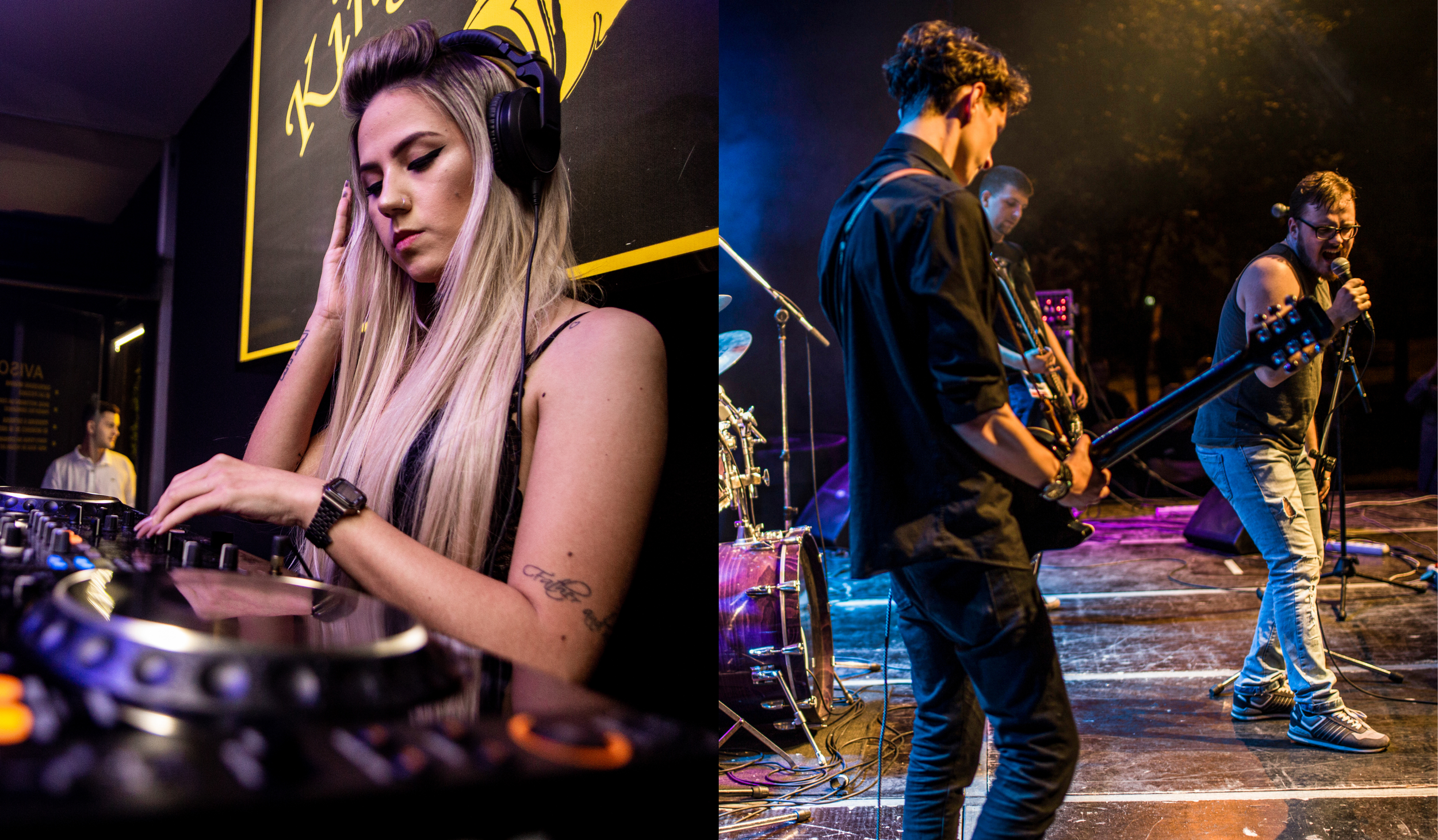
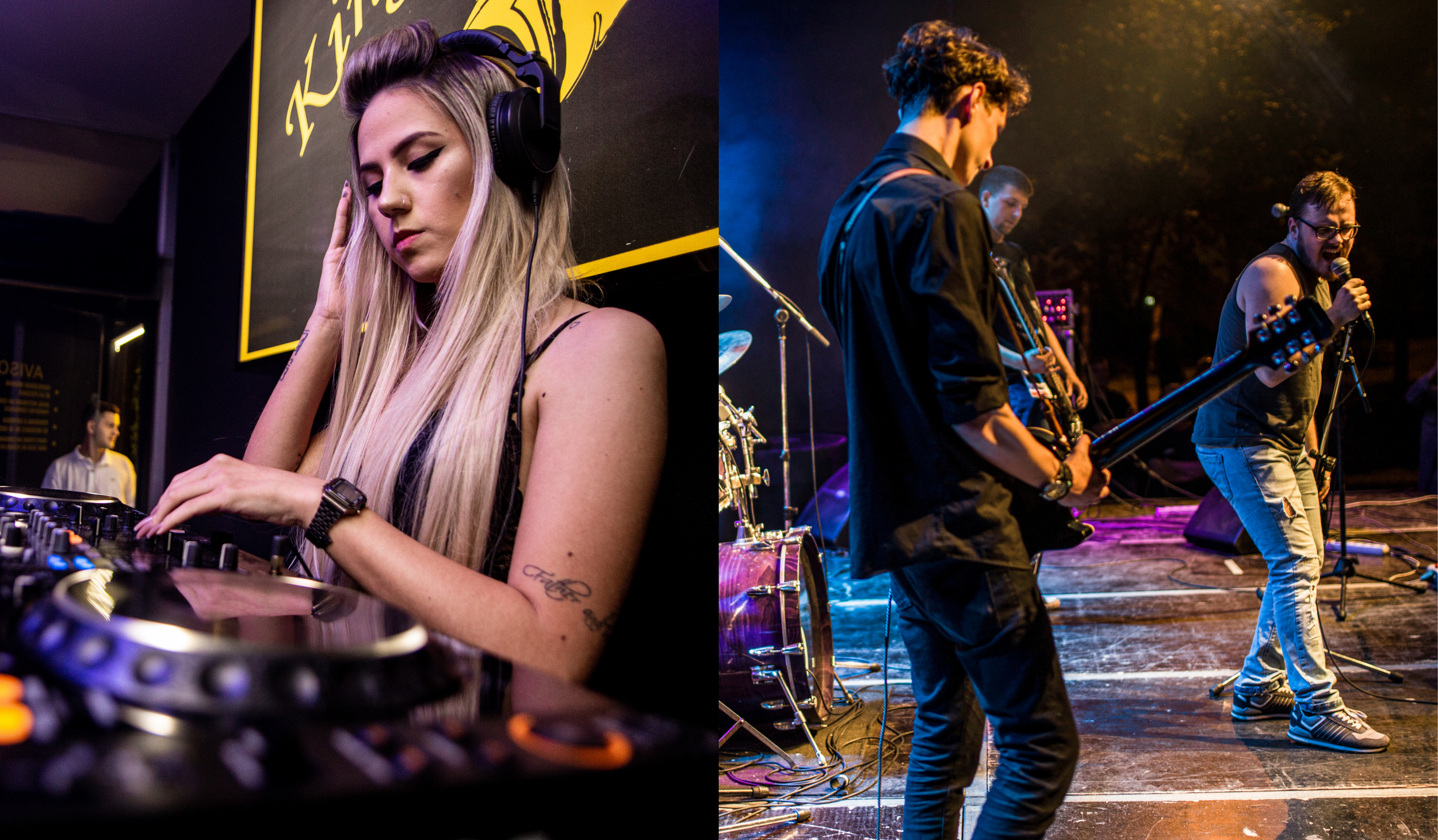
The main difference between a DJ and a band is that a DJ plays pre-recorded music with seamless mixing, while a live band performs songs live with real instruments and vocals. But there’s more to the story than that. The right event entertainment can completely transform the energy of a celebration, whether you’re planning a wedding, milestone birthday, or corporate gala.
Key Takeaways
A DJ uses recorded music and transitions between tracks smoothly for a club-like experience.
Live bands perform music with live vocals and instruments, offering energy and authenticity.
DJs are more budget-friendly and versatile with song choices and genres.
Live bands bring a unique, immersive performance and often better audience interaction.
The best choice depends on your budget, venue, crowd, and desired vibe.
What Is a DJ?
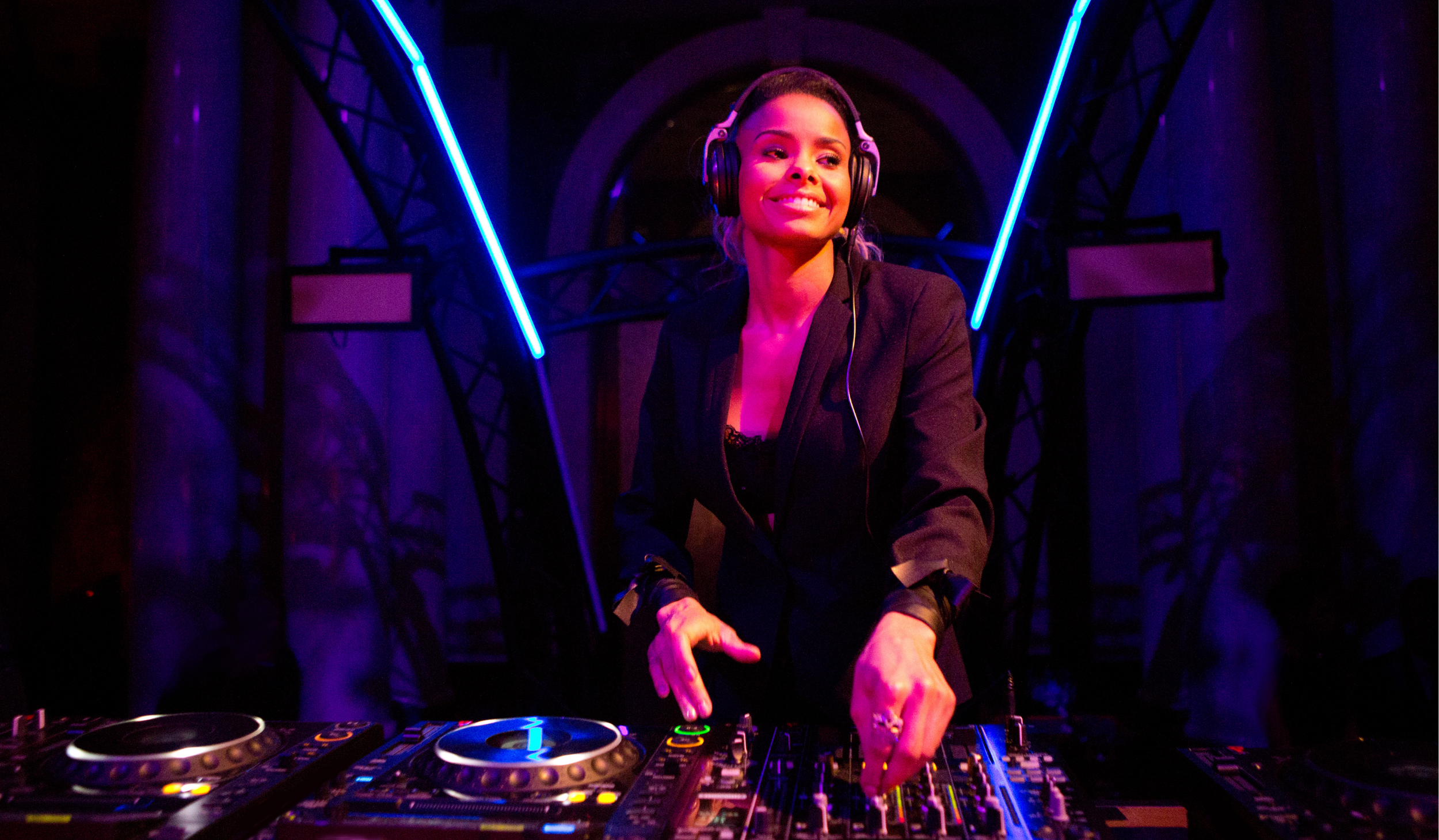
How DJs Work at Events
A DJ is much more than someone who presses play. A professional DJ brings the equipment, music knowledge, and ability to read the room as the event unfolds. They can adjust tempo, switch genres, and manage transitions in real time to keep the energy flowing naturally.
DJ Music Variety and Flexibility
One of the biggest perks of a DJ is their music library. From 80s throwbacks to the latest ARIA hits, they can cover decades and genres without missing a beat. Plus, they're usually open to real-time requests, which keeps guests involved and the dance floor full.
Modern Add-ons with DJs
Modern DJs often bring more than music. Think LED booths, custom monograms, or even a saxophonist jamming alongside the beats. Some DJs act as MCs, keeping the event running smoothly with announcements and introductions.
What Is a Live Band?

How Live Bands Perform at Events
When a live band takes the stage, there’s an immediate sense of atmosphere and connection. With live vocals, instruments, and natural interaction between performers, bands can make the entertainment itself feel like part of the main event rather than simply background music.
Live Band Energy and Impact
Nothing hits quite like the energy of live music. There's a tangible connection between performers and the crowd that gets people dancing, clapping, and singing along. It’s emotional, magnetic, and deeply human, ideal for weddings or high-impact celebrations.
Different Types of Bands
From string quartets to jazz ensembles to full-on party bands, there's a live music group to suit nearly any theme. Bands can tailor their sets to your event style, whether you're dreaming of elegant ambiance or high-energy rock.
Pros and Cons: DJ vs Live Band
DJ Pros and Cons
Song Variety: Extensive and nearly limitless selection.
Cost: Generally more affordable.
Space Requirements: Compact setup, ideal for small venues.
Sound Control: Consistent volume and flow.
Customisation: Easy to take song requests on the fly.
Visual Performance: Lower visual impact unless enhanced with lighting or visuals.
Set Breaks: No breaks needed—continuous music throughout the event.
Live Band Pros and Cons
Song Variety: More limited selection, but carefully curated.
Cost: Typically higher due to the number of performers.
Space Requirements: Requires more stage space and setup.
Sound Control: Can vary depending on acoustics and equipment.
Customisation: Less flexibility; usually pre-rehearsed and structured sets.
Visual Performance: High entertainment value with live interaction.
Set Breaks: Requires breaks between performance sets.
Song Variety
DJs shine in this department, they have access to nearly unlimited music libraries and can switch genres seamlessly. From TikTok hits to cultural classics, they adapt quickly to crowd preferences. Bands offer thoughtful setlists and can personalise some songs, but their range is shaped by the instruments and singers on hand.
Cost
Live bands often involve multiple performers, equipment transport, and extensive rehearsal time, all of which increase the price. DJs typically operate solo or in pairs, making them a more affordable choice for many events. Still, both can deliver high value depending on your vision.
Space Requirements
A DJ can fit into almost any event space, even in tight corners or compact venues. Bands, by contrast, need ample room for instruments, staging, and sound gear. This can be a limiting factor in small venues or unusual layouts.
Sound Control
DJs manage audio levels digitally and can maintain consistency throughout the night. Their control panel allows for quick volume tweaks and smooth transitions. Bands depend on physical acoustics and on-site mixing, which can vary depending on the environment.
Customisation
DJs can build playlists on the fly, blending genres and vibes as the event evolves. Bands tend to follow structured setlists but often reinterpret songs with unique live flair. If you want improvisation and soul, a live band brings musical surprises you won’t find in pre-recorded tracks.
Visual Performance
Live bands offer a dynamic stage presence with interaction, movement, and energy that captivates. They bring a visual rhythm to the music that enhances guest engagement. DJs can still dazzle with lighting, LED booths, and effects, but the focus remains on the soundscape.
Set Breaks
DJs play continuously with no disruption to the dance floor vibe. They keep the momentum flowing from start to finish, no pauses required. Bands usually need short intermissions, although most fill gaps with background tracks or a pre-recorded mix.
DJ or Band for Weddings – Which Is Better?

What Couples Should Consider
Are you after a non-stop dance party or a live serenade during your vows? DJs work particularly well for receptions and late-night dancing, while bands can add warmth and atmosphere to the ceremony or dinner. Couples can also introduce dance performances when they want an energetic visual moment that breaks up the traditional wedding program.
Blending Both: DJ + Live Band Hybrid Setup
Why choose one when you can have both? Many couples opt for a live band early in the evening to wow guests, then bring in a DJ to close the night with a bang. It’s dynamic, exciting, and offers the best of both worlds. Just be mindful of added logistics and cost.
DJ vs Band for Corporate Events and Private Parties
Corporate Events
DJs are ideal for branded activations, product launches, and networking events, they integrate well with AV presentations and bring sleek, professional setups. Bands are best suited to formal awards nights, black-tie galas, and elegant Christmas parties.
Private Parties, Birthdays, and Milestones
Throwing a 30th birthday or anniversary bash? DJs offer club vibes, crowd games, and interaction that suit all ages. Bands bring timeless charm for backyard barbecues, themed soirées, or a throwback to the good old days.
Venue Considerations When Choosing a DJ or Band

Indoor vs Outdoor Venues
DJs are generally versatile and can easily adapt to indoor or outdoor settings without much hassle. Live bands may face more challenges in outdoor environments, such as needing protection from the weather and stable power sources. Since acoustics change dramatically in open-air spaces, it's essential to plan ahead with your event coordinator.
Venue Rules and Restrictions
Many venues enforce strict rules on noise levels, especially in residential areas or heritage sites. DJs are often preferred in these cases due to better volume control and lower logistical demands. Make sure to also confirm the required time for equipment setup, soundchecks, and clean-up so it fits within your venue’s schedule.
Cost Comparison: DJ vs Live Band
What Impacts the Cost
Number of band members or DJ assistants
Travel fees, especially for rural or destination events
Equipment, lighting, staging
Time on site, performance length, and overtime rates
Average Price Range in Australia
Wedding DJs: $800 – $2,000+
Live Bands: $2,000 – $8,000+ depending on the group size, style, and location
While bands may carry a higher price tag, the value lies in the ambiance they create and the showmanship they bring.
Tips for Booking the Right Entertainment
Always watch videos of previous performances or attend a live showcase
Read reviews and testimonials across platforms
Confirm what's included: lighting, sound system, MC services
Ask about their backup plan in case of illness or tech issues
Clarify setup time, arrival windows, and special requests
Creating the Right Vibe for Your Event
Whether you go with a DJ, a live band, or the perfect blend of both, the key is to align your choice with your event’s personality and your guests’ energy. We’ve seen firsthand how the right music can elevate an event from fun to unforgettable, so take your time, explore your options, and choose what feels right for your vibe and vision.
At Mivida Events, we’re passionate about helping our clients curate unforgettable moments, and music plays a huge part in that. If you ever need help booking entertainment or tailoring your event experience, we’re here to help bring it all to life.

The Role of an Entertainment Agency in Planning a Memorable Event
Entertainment agencies elevate events by curating tailored performances, managing logistics, and ensuring seamless execution. From corporate functions to weddings, they help create memorable, engaging experiences that align with the event’s theme and audience. With industry expertise and creative insight, they turn entertainment into the heart of every successful celebration.

Picture this: a beautifully decorated venue, the scent of fresh flowers in the air, and a crowd buzzing with excitement. Yet, something feels missing. The energy isn’t quite there. Then, the lights dim, music swells, and a mesmerising performance begins. The audience is enthralled, captivated by the magic unfolding before them. This is the power of entertainment, the secret ingredient that transforms an event from ordinary to unforgettable.
Working with an experienced event entertainment agency can turn entertainment into one of the most memorable parts of an event. Whether it’s a corporate gala, wedding, festival, or brand activation, the right performances create emotional connections, amplify engagement, and leave a lasting impression.
That’s where entertainment agencies step in.
Understanding Entertainment Agencies: More Than Just Booking Talent

How Entertainment Agencies Work
An entertainment agency isn’t just a booking service, it’s a strategic partner in event planning. Agencies serve as a bridge between event organisers and top-tier performers, ensuring seamless execution from concept to performance. They don’t just find acts; they craft experiences, tailoring entertainment solutions that align with an event’s theme, audience, and objectives.
Types of Entertainment Agencies
Some agencies specialise in a particular niche, such as live music, corporate entertainment, or theatrical productions, while others provide full-service support from talent booking through to technical production and event design. For music-focused events, deciding between a DJ and a band can also help shape the atmosphere and guest experience. Choosing the right agency ultimately depends on the event’s scale, style, and specific needs.
The Difference Between an Entertainment Agency and an Event Planner
While event planners orchestrate the broader aspects of an event, venue selection, catering, décor, entertainment agencies focus solely on the performance experience. The best results come when the two collaborate, ensuring entertainment is seamlessly integrated into the event’s flow.
Key Services an Entertainment Agency Provides

1. Talent Sourcing and Booking
Entertainment agencies take the guesswork out of talent sourcing, providing access to a diverse range of performers suited to various event types. They have strong industry connections, ensuring exclusive access to high-calibre artists, speakers, and entertainers. With seamless negotiation and contract handling, agencies make the booking process stress-free for event organisers.
2. Customised Entertainment Curation
No two events are the same, so entertainment should feel tailored to the occasion rather than one-size-fits-all. By considering the event’s objectives, audience, and overall theme, agencies can recommend performances that strengthen the atmosphere and keep guests engaged. That might mean an elegant string quartet for a formal gala or vibrant Brazilian dancers for a product launch that calls for colour, energy, and visual impact.
3. Logistics and Coordination
Behind every seamless performance is a team managing complex logistics. Agencies handle everything from performer travel and accommodation to stage setups and rehearsal schedules. By overseeing the intricate details, they ensure smooth operations, allowing event organisers to focus on the bigger picture.
4. Event Production and Technical Support
Beyond securing talent, agencies bring expertise in technical production, ensuring performances are visually and sonically captivating. They coordinate lighting, sound, special effects, and stage design to enhance the entertainment experience. With state-of-the-art technology and experienced technicians, agencies transform event spaces into immersive environments.
5. Creative Event Design & Theming
An event’s aesthetic and ambiance play a crucial role in guest experience, and entertainment agencies excel in crafting visually stunning concepts. They integrate live performances, décor, and interactive elements to create a cohesive theme that captivates attendees. From futuristic corporate activations to enchanting wedding receptions, agencies bring creative storytelling into event design.
6. Legal and Contractual Support
Entertainment contracts can be complex, but agencies handle all legal aspects to ensure compliance and protect all parties involved. They manage performance agreements, licensing, insurance, and copyright concerns, preventing potential legal complications. With a professional approach to contracts, agencies provide peace of mind for both talent and event organisers.
7. Marketing & Promotional Strategies
Entertainment isn’t just about the event, it’s also a powerful promotional tool that extends brand visibility. Agencies help integrate performers into marketing campaigns, using entertainment to generate buzz on social media and drive attendance. From pre-event teasers to live-streamed performances, they craft strategies that maximise event reach and impact.
The Impact of Entertainment Agencies on Different Types of Events

1. Corporate Events
Entertainment plays a pivotal role in corporate functions, whether it’s a product launch, gala dinner, or team-building retreat. Strategic performances enhance brand storytelling, making events more engaging and memorable.
2. Weddings and Private Celebrations
From elegant string quartets to electrifying dance acts, entertainment transforms weddings into unforgettable experiences. Agencies help couples curate personalised performances that reflect their personalities and cultural traditions.
3. Festivals and Large-Scale Public Events
Festivals require intricate entertainment coordination, balancing multiple stages, diverse acts, and logistical challenges. Agencies ensure everything runs smoothly, from talent schedules to crowd management.
4. Charity & Fundraising Events
Entertainment is crucial in creating emotional impact at fundraising events. From inspiring keynote speakers to celebrity performances, agencies help craft experiences that encourage generosity and engagement.
5. Virtual & Hybrid Events
The digital age has revolutionised entertainment, with live-streamed concerts, interactive performances, and AR/VR experiences becoming increasingly popular. Agencies help brands create compelling virtual events that captivate audiences.
Why Hiring an Entertainment Agency is a Smart Investment

1. Expertise & Industry Connections
Agencies have established relationships with performers, ensuring exclusive access to high-quality talent at competitive rates. They understand the nuances of different entertainment styles, making it easier to match the right act to the right event. Their connections also mean they can negotiate better deals and secure exclusive performances that may not be available to the general public.
2. Time-Saving & Stress-Free Planning
Instead of spending hours searching for entertainment, negotiating contracts, and managing logistics, organisers can focus on other aspects of the event while the agency handles the details. Entertainment agencies streamline the entire process, from vetting performers to coordinating schedules and technical requirements. Their experience ensures smooth execution, allowing event planners to enjoy a hassle-free planning journey.
3. Creative & Trend-Focused Approach
Entertainment trends evolve quickly, and agencies stay current by balancing proven favourites with fresh, creative concepts. A live band can still bring strong energy and audience connection to a corporate event, while options such as immersive theatre, projection mapping, and multi-sensory experiences offer a more contemporary feel. With the right expertise, agencies can recommend entertainment that suits the event’s goals, audience, and overall atmosphere.
4. Risk Management & Backup Plans
Unexpected hiccups happen, performers cancel, venues face restrictions, or weather conditions shift. Agencies provide contingency plans, ensuring no last-minute panic. They maintain a network of backup performers and technical support teams, ready to step in when needed. Their expertise in risk mitigation means events stay on track, no matter the challenge.
Common Challenges in Event Entertainment & How Agencies Solve Them
| Challenge | How Agencies Solve It |
|---|---|
| Budget Constraints |
Agencies work within financial limits to source high-impact entertainment options that align with an event’s vision. |
| Last-Minute Cancellations |
With a roster of talent on hand, agencies can replace performers quickly, ensuring the show goes on. |
| Technical & Venue Limitations |
From sound restrictions to space constraints, agencies ensure performances are adapted for maximum impact within the venue’s specifications. |
| Audience Engagement & Satisfaction |
A well-curated entertainment lineup ensures that guests remain engaged, creating moments they’ll talk about long after the event ends. |
Making Every Event Unforgettable with the Right Entertainment Partner
At Mivida Events, we don’t just book acts; we craft experiences that bring events to life. We specialise in interactive and roving entertainment, transforming ordinary events into extraordinary experiences that leave lasting impressions. Whether it’s a high-energy festival, a sophisticated gala, or an intimate wedding, our expertise ensures seamless entertainment execution that leaves guests in awe. Because at the heart of every great event is a moment of wonder, let’s create yours together.

Top 18 Unique Places to Hold a Corporate Event in Australia

Finding the right location for a corporate event in Australia goes beyond simply reserving a space. From company milestones to annual strategy meetings or team-building retreats, the environment can directly shape how attendees engage, collaborate, and remember the experience. Pairing the right venue with thoughtfully planned corporate event entertainment can also help create an atmosphere that reflects your brand and keeps guests engaged throughout the event. Whether the goal is to secure a waterfront venue in Sydney, an industrial gem in Melbourne, or an outdoor retreat in Queensland, Australia offers a wide array of event spaces tailored to different business goals, team dynamics, and creative visions.
As corporate events continue to evolve, demand is shifting toward business event locations that are immersive, flexible, and memorable. Planners are seeking spaces that go beyond functional capacity, choosing environments that energize teams, reflect brand identity, and offer opportunities for curated entertainment that aligns with the tone of the event. From private gardens and architectural landmarks to historical sites and cultural destinations, the most impactful venues across Australia are those that deliver a sense of purpose along with strong visual appeal. Each of the spaces featured here brings something unique to the table, offering opportunities for businesses to connect, inspire, and create lasting impressions. Here are the unique places across Australia where your next corporate event can truly stand out.
Unique Corporate Event Venues in Sydney

1. Taronga Centre
With panoramic views of Sydney Harbour and the Opera House, the Taronga Centre offers a combination of elegance and wildlife charm. Located within the Taronga Zoo, it features multiple event spaces that can accommodate large conferences or intimate gatherings. Guests often arrive via ferry, setting a memorable tone before the event begins. The venue also gives back, a portion of the proceeds support conservation initiatives, making it appealing for companies with sustainability values.
2. Luna Park Venues
Few locations offer the blend of nostalgia and novelty quite like Luna Park. This harbourside amusement park provides access to heritage ballrooms, modern function rooms, and scenic outdoor terraces, all with stunning views of the Sydney skyline. It’s particularly effective for team celebrations, end-of-year parties, and brand launches that call for a fun, high-energy environment. Entertainment packages can be tailored to the venue’s character, with everything from carnival games to live performances that complement the atmosphere of the space.
3. The Calyx at the Royal Botanic Garden
A standout in design and atmosphere, The Calyx features one of the largest green walls in the Southern Hemisphere and an adaptable indoor-outdoor layout. Situated within the Royal Botanic Garden, it allows guests to enjoy both curated horticulture and cutting-edge event design. It’s ideal for innovation workshops, award nights, or networking events where creativity and natural beauty are equally important.
Unique Corporate Event Venues in Melbourne

4. The Glasshouse at Olympic Park
Known for its modern architecture and floor-to-ceiling windows, The Glasshouse offers a clean and flexible space for high-level corporate events. Its location beside Melbourne Park places it in the heart of the action, while its minimalist interiors allow for full customization. The venue’s integration of state-of-the-art technology makes it a strong choice for presentations, forums, and executive off-sites.
5. SEA LIFE Melbourne Aquarium
For companies looking to create a truly immersive experience, the aquarium provides underwater tunnels, vibrant coral reef settings, and private event spaces surrounded by marine life. The novelty of the venue often boosts attendance and engagement. It’s especially popular for CSR-focused events or industries related to science, innovation, and conservation.
6. Old Melbourne Gaol
This historic site brings atmosphere and storytelling into the event experience. Once a functioning prison, the Gaol now hosts unique gatherings in its cellblocks and courtyard. Events held here are both impactful and unforgettable, with guided night tours or immersive crime-themed team activities available as part of the package. It’s best suited to companies looking to break away from the expected.
Unique Corporate Event Venues in Brisbane

7. Howard Smith Wharves
Positioned beneath the iconic Story Bridge, Howard Smith Wharves is a revitalized riverfront precinct that blends industrial history with modern sophistication. It houses multiple event spaces, including the Rivershed and Bougainvillea House, each offering panoramic views of the Brisbane skyline. The location works well for product launches, company anniversaries, and networking events where atmosphere and accessibility matter. Its nearby restaurants and on-site brewery make it easy to expand the experience beyond the event itself.
8. Queensland Museum’s Whale Mall
An unexpected and awe-inspiring setting, the Whale Mall features suspended whale skeletons above an open-air foyer connected to the Queensland Museum. It brings together science, art, and innovation in one captivating space. This venue is ideal for conferences, educational symposiums, and sustainability-driven functions. The presence of museum curators and optional guided experiences can add depth to the event’s theme.
9. The Joinery
Located in West End, The Joinery is a contemporary warehouse venue known for its polished concrete floors, exposed beams, and high ceilings. It serves as a blank canvas that allows full creative control over styling and layout. With an emphasis on local catering and flexible setup options, The Joinery is popular for corporate workshops, panels, and immersive brand activations. Its open-plan design encourages collaboration and conversation.
Unique Corporate Event Venues on the Gold Coast

10. Miami Marketta
A cultural hub by night and a creative space by day, Miami Marketta offers a vibrant, artsy atmosphere for companies looking to host relaxed and unconventional events. The venue features food trucks, live music stages, and eclectic lighting that appeals to industries in media, fashion, and design. It’s especially effective for brand activations, product launches, or networking events that thrive on authenticity and local flavor.
11. HOTA – Home of the Arts
Gold Coast’s premier cultural precinct, HOTA combines contemporary design with lush parklands and lake views. Its event offerings range from rooftop terraces to professional theatres, making it suitable for creative industry showcases, strategy sessions, or collaborative learning events. The venue’s connection to the arts makes it possible to integrate installations, performances, or exhibitions directly into the programming.
12. Currumbin Wildlife Sanctuary
For companies looking to offer an experience as memorable as it is meaningful, Currumbin Wildlife Sanctuary provides natural surroundings and native animals in a conservation-focused environment. Function spaces are nestled among eucalyptus trees or beside animal enclosures, allowing guests to experience Australia’s biodiversity firsthand. It works well for wellness events, eco-conscious brand experiences, and team-building retreats.
Unique Corporate Event Venues on the Sunshine Coast

13. The Events Centre Caloundra
A cornerstone of professional gatherings in the region, The Events Centre offers flexible rooms, modern technology, and experienced staff equipped to handle everything from seminars to large-scale conferences. Located just a short walk from the coastline, it gives guests a blend of business and relaxation. With a focus on seamless service and adaptable setups, this venue suits multi-day conferences, corporate training, and community partnerships.
14. Australia Zoo Function Spaces
Famous worldwide for its wildlife conservation work, Australia Zoo also houses several distinct venues perfect for corporate use. From the Crocoseum to private conference suites, the zoo allows companies to build unique agendas that include behind-the-scenes tours and animal encounters. It’s an ideal choice for eco-conscious brands, family-inclusive events, and team-building experiences that prioritize connection and shared adventure.
15. Noosa Boathouse
Floating on the Noosa River, this multi-level venue delivers one of the most scenic event settings on the Sunshine Coast. Its relaxed coastal style, fresh seafood menus, and sunset views make it a prime location for networking events, incentive celebrations, or leadership retreats. With both indoor and rooftop spaces, Noosa Boathouse brings a polished yet laid-back atmosphere that resonates well with creative agencies and boutique firms.
Unique Corporate Event Venues in Adelaide

16. The National Wine Centre
Located on the edge of the Adelaide Botanic Garden, the National Wine Centre offers more than just award-winning wines. Its architecture and sustainability features create a sophisticated atmosphere, while guided wine experiences add a layer of interactivity. This venue is frequently chosen for executive dinners, client appreciation nights, and strategy sessions, especially in industries where hospitality and refinement are key to the message.
17. Adelaide Oval Functions & Events
Beyond its status as a sports icon, Adelaide Oval features a wide range of premium event spaces, including rooftop views, heritage boardrooms, and grand function halls. It’s highly versatile, serving everything from formal conferences to team-building days that end with a behind-the-scenes stadium tour. For brands tied to performance, competition, or history, it offers a powerful storytelling platform.
18. Plant 4 Bowden
Housed in a reimagined warehouse in Adelaide’s creative district, Plant 4 Bowden blends industrial charm with community energy. The venue showcases local artisans, sustainable food options, and open spaces that invite conversation and creativity. It’s well-suited to startups, nonprofits, or mission-driven brands looking to create a casual, connected environment that reflects modern values and innovation.
What to Consider When Choosing a Unique Corporate Event Venue

Before booking a venue, think beyond capacity and cost. A unique setting requires careful planning, especially when it’s outside the standard hotel or convention center setup.
Match the Space to the Purpose
The goal of your event should guide every decision. Is it a client appreciation night, a team milestone, or an investor presentation? Some venues suit informal gatherings, while others are ideal for content delivery, networking, or immersive experiences. Make sure the format flows with the space.
Logistics and Guest Experience
A spectacular venue loses its impact if it’s hard to reach or doesn’t accommodate basic needs. Prioritize accessibility, close to public transport, with parking options, smooth entry, and accessible restrooms. Also check for climate control, seating flexibility, and food service areas.
Technology and Practicality
Not all unique venues are plug-and-play. Confirm what’s included in terms of audio-visual gear, internet access, lighting, and power sources. If something’s not built in, you’ll need to factor in equipment hire and setup time.
Visual Identity and Brand Fit
The venue should align with your brand personality. A creative agency might prefer an industrial loft, while a finance firm may lean toward a heritage hall. Use the environment to communicate tone, professionalism, or creativity without needing to say a word.
Entertainment That Matches the Venue

The right entertainment brings an event to life, especially in venues with strong visual or thematic character. Choosing an experienced provider can make a significant difference, as an entertainment agency can coordinate performers, timing, production requirements, and the overall flow of the experience.
At Mivida Events, we produce high-impact live shows, dancers, DJs, and custom performances that leave a lasting impression. Drawing from Latin American, Caribbean, and Afro-Cuban traditions, our shows are bold, rhythmic, and visually powerful. Brazilian dancers can be particularly effective for events that need a lively, colourful performance capable of immediately lifting the atmosphere.
For events built around music, choosing between a DJ and a band can shape everything from the atmosphere to how guests interact with the space.
Our performances shine in immersive or open-air spaces where visual impact and audience connection take centre stage. For corporate celebrations in particular, a live band can bring a sense of energy and immediacy that works especially well in large, flexible venues.
Add-Ons to Amplify the Experience
Enhancements tailored to your brand and audience can elevate the entire event. The right add-ons create memorable moments and deepen the connection between the venue, the experience, and your company’s message.
Branded Activations
Create installations that reflect your brand using projection walls, photo booths, or light sculptures. These elements provide immersive engagement and organic opportunities for social sharing.
Local Food and Drink
Partner with local caterers or pop-up chefs to design menus inspired by the region. This not only supports small businesses but turns food and drink into part of the cultural experience.
Custom Styling
Minimalist, maximalist, or experiential design can bridge your brand identity with the character of the venue. Work with stylists who understand how to highlight architectural features while staying aligned with your theme.
Interactive Technology
Use QR code stations, live polling, social walls, or touchscreen installations to turn passive guests into active participants. These tech elements are particularly effective in creative, forward-thinking settings.
Booking and Timing Considerations
Event planning works best when it’s proactive, not reactive. Across Australia, cities like Melbourne, Sydney, Brisbane, and Adelaide all experience peak seasons that fill quickly, especially during spring and the months leading up to Christmas. These high-demand periods often mean limited availability for popular venues and entertainment providers.
To stay ahead and maintain flexibility in your planning, consider the following:
Start venue inquiries four to six months in advance to secure your preferred date and location
Ask about inclusions such as audio-visual equipment, security, cleaning services, and local council permits
Consider off-peak options like Tuesdays, weekday mornings, or outside of traditional seasonal peaks to access better availability and rates
Confirm venue restrictions early, including sound limitations, vendor access windows, bump-in and bump-out times, and curfews
By asking the right questions early and planning ahead, you allow time to coordinate entertainment, catering, and styling partners effectively. A well-structured timeline ensures every aspect of the event moves in sync and gives you more control over the guest experience.
Why Venue Choice Impacts More Than Aesthetics

A well-chosen venue does more than provide visual appeal. It plays a central role in shaping how guests perceive and engage with your event. When people walk into a space that reflects the tone, values, and purpose of the gathering, they feel immersed right from the beginning. That immediate sense of alignment creates a stronger emotional connection, helping the experience resonate more deeply.
This alignment is especially important in the corporate space, where events are often measured not only by execution but also by how well they reflect a brand’s identity. A venue that supports your message enhances clarity and communication. It sets the mood before the first speaker takes the stage or the first guest is greeted at the door.
In a business culture that places increasing importance on creativity, culture, and meaningful experiences, choosing a unique venue becomes a strategic decision. It allows you to express your vision, foster genuine connections, and design an atmosphere that encourages both focus and inspiration.
When complemented by vibrant entertainment and thoughtful planning, the right venue elevates the experience beyond logistics. It becomes part of the story, transforming your event into something memorable, emotionally engaging, and truly worth attending.
Bring your vision to life by exploring these venues and partnering with the trusted entertainment experts at our agency, Mivida Events & Entertainment. Start early, plan thoughtfully, and create moments your team and guests will talk about long after the event concludes. The stage is set, contact us today to make it unforgettable.

5 Reasons to Book a Live Band for Your Corporate Event
Discover why a live band is the ultimate game-changer for corporate events. From setting the perfect tone and boosting brand image to enhancing networking and guest engagement, live music creates unforgettable moments. This article explores five powerful reasons to book a live band, offers tips on how to choose the right one, and even compares bands to DJs to help you make the best choice for your event.

Corporate events have evolved. Long gone are the days of stiff, uninspired gatherings where attendees simply endure speeches and sip on lukewarm coffee. Today, successful events are built around experiences that keep people engaged, and the right live entertainment for events can play a major role in shaping that atmosphere from the moment guests arrive.
Imagine stepping into a venue filled with energy. The pulse of live music fills the room, setting the tone before a single speech is given. People are drawn together, conversations flow effortlessly, and an atmosphere of excitement and sophistication takes over.
That’s the power of live music. And yet, too often, corporate events rely on playlists or DJs, missing out on the tangible magic that only live performances can create. Whether you're hosting a gala, product launch, networking event, or end-of-year celebration, here’s why booking a live band is the game-changer you didn’t know you needed.
1. Music That Responds to the Moment – Creating an Unmatched Atmosphere

Ever walked into an event where the music felt flat? A pre-recorded playlist, no matter how well-curated, can’t adjust to the rhythm of the room.
A live band has the ability to read the crowd, lift the energy, and bring a sense of spontaneity that a fixed playlist cannot match. When deciding between a DJ and a band, it often comes down to whether you want the flexibility of recorded music or the atmosphere and interaction of a live performance.
It’s more than just music, it’s about creating moments that feel organic and alive. A talented band knows exactly when to shift gears, playing off the energy in the room. This kind of dynamic, responsive entertainment keeps guests engaged in a way that a DJ simply can’t replicate.
Pro Insight: The Science Behind Live Music & Emotional Engagement
Studies in music psychology reveal that live performances trigger higher emotional responses compared to recorded music. This means attendees will remember the experience long after the event ends, associating those positive emotions with your brand.
2. Elevates Your Brand Image – Make a Statement Without Saying a Word
First impressions count. And the entertainment you choose for your corporate event says a lot about your company.
Booking a live band instantly positions your event as high-end, innovative, and well-curated. It shows attention to detail and a commitment to creating a premium experience, which, in turn, reflects the quality of your brand.
Think about the biggest corporate events, luxury product launches, or industry award nights. Live music is a non-negotiable. Why? Because it adds an air of sophistication and exclusivity that elevates the entire atmosphere.
Beyond Entertainment: Music as a Branding Tool
Your choice of live music can also serve as a subtle but powerful extension of your brand identity. Whether it’s:
A jazz trio for an elegant black-tie affair
A funk or soul band to inject energy into a young, vibrant company culture
A classical string ensemble to exude professionalism and refinement
Every element of your event, including the music, should align with your brand image, and live bands offer that customisation and prestige.
3. Forges Stronger Connections – Music as a Networking Catalyst

Networking can be awkward. Walking into a corporate event where small talk feels forced and conversations stall can quickly turn the experience from promising to painful. Live music acts as a social bridge, giving people a natural icebreaker, something to connect over, and a shared experience to discuss.
How Live Music Enhances Social Engagement:
Creates Common Ground – A well-placed song sparks nostalgia, shared interests, and instant conversation starters.
Eases Social Anxiety – Music subtly fills pauses, making networking less intimidating.
Encourages Interaction – A lively performance naturally draws people together, breaking down barriers and setting a relaxed tone.
Case in Point: The Psychological Effect of Music on Social Bonding
Research in neuroscience suggests that listening to live music increases oxytocin levels, the hormone linked to trust and connection. That means your guests aren’t just attending your event; they’re forming genuine, lasting relationships.
4. Leaves a Lasting Impression – Transforming Your Event into an Experience
People forget speeches. They forget what was on the menu. But they never forget how they felt at an event. Music has a way of searing moments into memory. The right song, played live in the perfect setting, becomes the soundtrack to an unforgettable evening.
Think about the most standout corporate events, they often have a strong sensory element that makes the experience memorable. The feel of an elegant venue, the sound of live music, and visually striking performances such as Brazilian dancers can all create moments that guests continue talking about long after the event ends.
Live bands offer a level of energy and emotion that pre-recorded music simply can’t replicate. Guests walk away feeling like they were part of something special, and that feeling is directly associated with your brand.
Unexpected Perks of Live Music for Event Impact:
Encourages guests to stay longer – More engagement = higher event ROI.
Boosts social media appeal – People love posting about live music experiences, offering organic brand exposure.
Creates signature moments – A live performance tailored to your company can turn into an iconic brand tradition.
5. Unrivalled Customisation & Versatility – Your Event, Your Soundtrack

A pre-made playlist can’t adapt. A DJ’s setlist isn’t personal. But a live band? They can custom-tailor every song choice, style, and even lyrics to fit your event perfectly. From themed entertainment to completely custom setlists, live bands allow for an unmatched level of personalisation:
Want a brand anthem performed live? Done.
Need a smooth background set for cocktail hour that transforms into a full-blown party later? They can do that.
Looking to incorporate company values or inside references into the performance? Bands can work with you to craft a one-of-a-kind experience.
Live Bands in the Age of Hybrid Events
Even in an era where virtual and hybrid corporate events are gaining traction, live bands can bridge the gap:
Live-streamed performances keep online attendees engaged.
Virtual request features allow remote guests to interact with the band.
Custom soundtracks can be pre-recorded for digital branding.
This level of adaptability and creativity is what sets live bands apart from any other entertainment option.
How to Choose the Right Live Band for Your Corporate Event
Not all bands are suited for corporate functions. A great live band understands the nuances of professional events, balancing energy, engagement, and event flow.
Checklist for Hiring a Corporate Event Band
Before booking, ask yourself:
1. Does the band have corporate event experience?
A great wedding or pub band isn’t always the right fit for a corporate setting. A professional corporate event band knows how to work within event schedules, keep sound levels appropriate, and interact with a business audience.
2. Can they customise their setlist to match the event’s theme and audience?
Your event might require a mix of genres, background music for networking, uplifting beats for transitions, and an energetic finish.
3. Are they adaptable to different venue sizes and setups?
A large gala in a ballroom may need a full band with brass, percussion, and vocalists. A small networking event may call for an acoustic duo or jazz trio.
4. What are their technical requirements?
Make sure the band provides a detailed tech rider, including sound, lighting, and stage needs.
5. How do they interact with the audience?
Some bands focus purely on performing, while others actively engage guests, whether it’s through song requests, crowd participation, or even tailoring lyrics for a company message.
6. Do they have performance videos and references?
Never book a band blindly. Watch performance videos, read reviews, and speak to past clients if possible.
Top Questions to Ask Before Booking a Band
How flexible is your setlist?
Do you take requests?
Can you adapt your performance for different segments of the event?
What equipment do you provide, and what do we need to arrange?
Do you have experience performing at corporate functions?
A great band should be able to confidently answer these questions and tailor their performance to your event’s specific needs.
Live Band vs. DJ: Which is Better for Corporate Events?
There’s no single entertainment format that works for every event. A professional DJ offers flexibility, broad music selection, and smooth transitions, while a live band provides the visual impact and direct audience connection of a live performance.
| Feature | Live Band | DJ |
|---|---|---|
| Energy & Atmosphere |
High-energy, engaging experience |
Pre-recorded, less interactive |
| Song Flexibility |
Customisable, can take requests |
Wide variety, instant track changes |
| Budget |
Higher cost but premium experience |
More budget-friendly |
| Audience Interaction |
High—live performers connect with guests |
Minimal—pre-programmed music |
| Event Prestige |
Creates an upscale, unique feel |
Less premium than live entertainment |
When a DJ Might Be a Better Fit
If your event requires an extensive range of music genres.
If you have a smaller venue with space limitations.
If you’re working with a strict budget.
But if your goal is a high-impact, memorable, and premium event, a live band is the way to go.
Final Thoughts
At Mivida Events, we’ve seen first-hand the transformative power of live music. Whether it’s an intimate networking event or a grand-scale gala, the right band can turn an ordinary evening into an extraordinary experience.
A live band doesn’t just play songs, it creates an atmosphere, enhances networking, and ensures your guests leave feeling energised and inspired. Live music isn’t just entertainment, it’s the soundtrack to an unforgettable event. Your event deserves more than background music, it deserves a soundtrack.

Brazilian Dancers: Adding Energy and Culture to Your Event
Bring the electrifying energy of Brazilian dancers to your event with vibrant performances that captivate and engage. From the pulsating beats of samba to the dynamic movements of capoeira, these cultural ambassadors create an unforgettable spectacle that blends rhythm, colour, and storytelling. Whether it's a corporate gala, wedding, or festival, Brazilian dancers add an interactive and visually stunning experience that keeps guests enthralled.
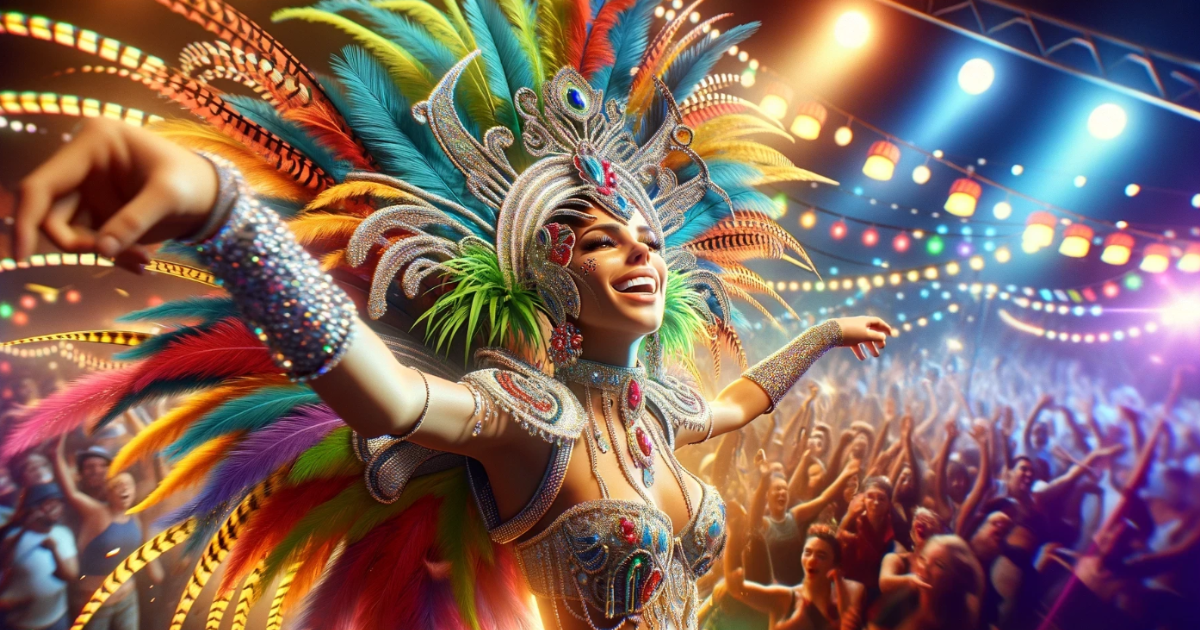
Picture this: the lights dim, a rhythmic drumbeat pulses through the air, and suddenly, a burst of colour and movement takes over the stage. Choosing the right performers for events can completely change the atmosphere, and Brazilian dancers bring an especially vibrant mix of rhythm, colour, and energy. Adorned in elaborate costumes, they command attention and transform the moment into an experience guests are unlikely to forget.
Brazilian dancers are more than just performers; they are cultural ambassadors, storytellers, and energy-bringers who create an atmosphere that lingers long after the music stops. Their rhythmic movements, dynamic presence, and vibrant costumes fuse together to produce an immersive spectacle that captivates audiences and elevates any occasion.
Whether it's a private party, a corporate event, or a grand festival, the magic of Brazilian dance is unparalleled. Let’s dive into why these performers are the ultimate choice for adding dynamism and authenticity to your event.
Why Brazilian Dancers Are More Than Just Performers

There’s a misconception that Brazilian dancers are simply about samba and sequins, but there’s a depth to these performances that many overlook. Brazilian dance is storytelling, a celebration of life, and an art form rooted in history. Every step, every beat, and every costume carries meaning, making the experience not only visually stunning but also emotionally resonant.
A Dance Tradition That Spans Centuries
Brazilian dance styles have evolved from a blend of African, Indigenous, and Portuguese influences, giving rise to a variety of forms beyond samba.
Samba – The heartbeat of Brazilian dance, rooted in Afro-Brazilian traditions, now known globally for its fast-paced rhythm and vibrant performances.
Forró – A lively, partner-based dance from Northeast Brazil, perfect for creating an intimate yet energetic atmosphere.
Axé – A fusion of Afro-Caribbean and Brazilian rhythms, designed to uplift and engage audiences.
Capoeira – A breathtaking mix of dance and martial arts that captivates with its acrobatics and controlled fluidity.
Frevo – An energetic, high-tempo dance from Pernambuco, known for its intricate footwork and colourful umbrellas.
Lambada – A sensual dance that gained international popularity in the 1980s but remains a nostalgic favourite.
When booking Brazilian dancers, you’re not just hiring a performance, you’re integrating a legacy of movement that has been perfected over generations.
What Brazilian Dancers Bring to Your Event

1. An Unmatched Energy That Engages Every Guest
The pulsating rhythm of Brazilian drums alone is enough to get people moving, but pair it with dancers who exude joy and charisma, and you’ve got an atmosphere that’s simply irresistible. Unlike other forms of entertainment where the audience remains passive, Brazilian dance performances invite interaction. Whether through call-and-response drumming, spontaneous conga lines, or mini dance lessons, the engagement level is off the charts.
2. A Visual Spectacle That Elevates the Experience
Costume design is an integral part of the performance, and Brazilian dance ensembles are among the most visually stunning in the world.
Feathered headdresses and sequinned ensembles reflect the grandeur of Rio Carnival.
Flowing skirts and beaded accessories add authenticity and cultural depth.
Bright, bold colours stimulate excitement and anticipation among guests.
Every element is crafted to enhance the visual impact, ensuring your event is nothing short of breathtaking.
3. A Cultural Celebration That Adds Depth to Your Event
Incorporating Brazilian dancers is about more than entertainment, it brings a strong cultural element that can connect with a wide range of audiences. These performances work well across private celebrations, festivals, weddings, community events, and even a corporate event venue where visual impact and guest engagement matter. The performance can then be tailored to suit the occasion, from a high-energy carnival-style show to a more polished samba presentation.
How to Choose the Right Brazilian Dance Performance for Your Event

Before hiring Brazilian dancers, consider the following to ensure the best fit for your event:
1. Event Type & Audience Expectation
Corporate Events: Need a performance that is high-impact yet polished? A professionally choreographed samba show with live percussionists makes a strong impression.
Private Parties: Want something interactive? Opt for a dance troupe that engages guests with a samba crash course.
Festivals & Cultural Events: Looking for authenticity? Go for an ensemble that incorporates live drumming and traditional storytelling elements.
2. The Power of Live Music vs. Pre-Recorded Tracks
The decision between hiring dancers with live drumming (batucada) and using pre-recorded tracks can significantly change the feel of the performance. Much like choosing between live music or a DJ, each option creates a different atmosphere. Live percussion adds immediacy and energy, while recorded tracks offer greater control over timing and choreography.
3. Customisation Options
The best performances aren’t off-the-shelf, they’re tailored.
Thematic elements (e.g., masquerade-themed samba, corporate brand-coloured costumes).
Audience participation levels (fully interactive vs. stage performance only).
Performance length to fit your schedule.
The Science of Why Brazilian Dance Captivates Audiences

1. Rhythmic Entrainment: The Human Connection to Beats
Studies show that people are naturally drawn to rhythmic movement. The infectious beats of Brazilian music synchronize with heart rates, making it almost impossible to stay still. This natural response is why audiences instinctively clap, tap their feet, or sway to the rhythm without even realizing it.
2. The Psychology of Colour in Performance
Bright, bold colours used in costumes evoke positive emotions, making guests feel happier and more engaged. Studies in colour psychology reveal that vibrant hues like red, yellow, and gold enhance excitement and anticipation. The visual stimulation of these costumes, combined with dynamic movement, creates a mesmerising effect that heightens audience engagement and leaves a lasting impression.
3. The Joy of Group Synchronisation
There’s something hypnotic about watching a group of dancers move in perfect harmony, our brains love patterns, and Brazilian dance delivers that in the most thrilling way. This synchronised movement fosters a sense of unity and shared excitement, making the performance feel almost magical.
Where to Use Brazilian Dancers for Maximum Impact
To make the most of a Brazilian dance performance, place it at moments where it can have the strongest impact. Pairing dancers with a live band or percussion ensemble can add even more energy to entrances, headline performances, and other high-impact parts of the event.
Grand Entrances & Opening Acts: Set the tone with an energetic first impression.
Main Stage Entertainment: Create a memorable focal point for the event.
Surprise Elements: Reignite the room with an unexpected performance.
Themed Nights & Seasonal Events: Add energy to summer parties, New Year’s Eve galas, and Latin-themed celebrations.
Final Thoughts: Make Your Event Unforgettable with Brazilian Dancers
Brazilian dancers bring more than just entertainment, they create an electrifying atmosphere that turns any event into an unforgettable celebration. Whether it’s a corporate event, wedding, festival, or private party, their energy, rhythm, and vibrant presence leave a lasting impact.
At Mivida Events & Entertainment, we craft dynamic performances tailored to your vision, ensuring your guests experience the magic of Brazilian dance.
Ready to elevate your event? Contact us today and let’s bring your celebration to life with the spirit of Brazil!

How a Professional DJ Can Transform Your Wedding Reception
A professional DJ does more than just play music—they create an unforgettable experience by setting the perfect atmosphere, ensuring seamless transitions, and keeping the dance floor alive. Beyond mixing songs, they act as a skilled MC, guiding key moments and maintaining the event’s energy with interactive entertainment. With top-tier sound equipment and the ability to handle unexpected situations effortlessly, a pro DJ ensures your wedding runs smoothly.

There’s something truly magical about a wedding reception that pulses with energy, where every guest feels drawn to the dance floor, and the night flows seamlessly from one unforgettable moment to the next. The right wedding entertainment helps create that atmosphere, while a professional DJ keeps the music, timing, and energy flowing throughout the celebration. From setting the perfect mood to ensuring every moment feels effortless, an expert DJ can transform your wedding reception into a spectacular experience.
If you’re on the fence about whether a professional DJ is worth the investment, let us take you behind the scenes of how they can elevate your wedding reception beyond your expectations.
Crafting the Perfect Atmosphere: The Power of Music Curation

Music is more than just background noise, it’s the heartbeat of your wedding reception. Choosing between a DJ and a band can shape the atmosphere, but a professional DJ offers the flexibility to adjust songs, genres, and energy levels throughout the night.
Every wedding has its own unique vibe, personality, and emotional beats. From the first champagne toast to the last song of the night, music sets the mood. A professional DJ knows how to read the crowd in real time, shifting the energy when needed, keeping guests engaged, and ensuring the night never falls flat.
Picture this: the lights dim, an acoustic version of your favourite song plays as you share your first dance. The moment is intimate and deeply personal. Then, just as the dance floor needs a boost, the DJ seamlessly transitions into a high-energy hit, sending an electric pulse through the room. That’s the art of musical storytelling, and it’s something a playlist or a novice DJ simply can’t replicate.
Seamless Flow: No Awkward Pauses, Just Effortless Transitions
A wedding isn’t just about music, it’s about flawless execution. The night is a tapestry of special moments, and a professional DJ ensures every transition is smooth, from your grand entrance to the final farewell.
Ever been to a wedding where there’s an awkward silence before the first dance? Or where the cake-cutting song suddenly blares at the wrong moment? It’s jarring, and it can disrupt the entire atmosphere.
We believe that the magic of a wedding lies in the seamless progression of events. A skilled DJ acts as both the conductor and the heartbeat of the reception, ensuring there are no lulls, no awkward gaps, just an effortlessly flowing celebration.
Keeping the Dance Floor Alive: The Science of Crowd Engagement

A common fear couples have is that their guests won’t dance. A professional DJ knows how to read the crowd and gradually build the energy, while adding performers such as Brazilian dancers can create an extra burst of movement and excitement that draws guests into the celebration. It’s not just about playing chart-toppers; it’s about understanding the psychology of a group. The key? Strategic song selection and dynamic interaction.
A great DJ starts with tempo layering, gradually increasing energy levels so guests naturally gravitate toward the dance floor.
They mix classics with modern hits, ensuring there’s something for every generation.
They introduce unexpected elements, mashups, remixes, and interactive segments, to keep energy levels high.
If a song isn’t working? A pro DJ seamlessly pivots, reading reactions and adjusting in real time.
And let’s not forget the hype factor! Some DJs incorporate fun, interactive moments like dance-offs, surprise throwback sets, or personalised shoutouts. These small touches turn a good reception into a legendary celebration.
More Than Music: The DJ as Your Master of Ceremonies
One of the biggest misconceptions about hiring a DJ is that they simply play music. The reality? A professional DJ is also an expert MC, ensuring your reception runs smoothly while keeping guests engaged.
At Mivida Events, we know how crucial it is to have someone who can handle key announcements, guest interactions, and unexpected surprises with professionalism and charm. A DJ:
Introduces the wedding party with energy and enthusiasm.
Announces key moments, cake cutting, first dance, bouquet toss, with perfect timing.
Keeps the energy flowing while balancing elegance and excitement.
Handles any hiccups discreetly, microphone issues, unplanned changes, or guest interruptions.
Without an experienced DJ guiding the night, receptions can feel disjointed and chaotic. But with the right professional, the night unfolds with effortless sophistication.
Elevating Special Moments: Personalisation & Emotional Connection

A great wedding DJ doesn’t just play music, they weave personal moments into the soundtrack of your day. The right song at the right time can turn a simple moment into something deeply emotional and unforgettable.
Imagine a custom-edited version of your first dance song, featuring a meaningful voiceover from your partner.
Picture a surprise mix of your family’s favourite songs, creating an impromptu generational dance-off.
Think about a slow build into a high-energy finale, making your grand exit a cinematic moment.
Every couple is unique, and a pro DJ ensures the night reflects your personality, your story, and your energy.
Interactive Entertainment: Beyond the Dance Floor
A DJ creates an immersive and engaging experience that keeps guests entertained beyond the dance floor. The right DJ can incorporate unique elements that make the night interactive and unforgettable:
Live mashups and remixes tailored to your reception’s energy.
Photo booth collaborations, syncing music with fun, spontaneous snapshots.
Games and challenges that get guests laughing and participating.
Themed sets, from retro throwbacks to festival-style dance-offs.
This level of creativity keeps guests engaged and makes your wedding truly unforgettable.
Technical Expertise: The Difference Between Good Sound and Great Sound

Great music means nothing if the sound quality is poor. A professional DJ brings high-end audio equipment, premium speakers, wireless microphones, and backup systems, but the venue layout can also affect acoustics, speaker placement, equipment access, and how sound carries throughout the space.
We’ve seen too many weddings where:
The mic cuts out during the vows or speeches.
The music is either too loud or too soft.
The bass is muddy, making it hard to enjoy the songs.
A skilled DJ knows how to balance sound levels, ensuring everyone, whether at the head table or in the back row, hears every word and note perfectly.
Handling Unexpected Situations Like a Pro
No event goes perfectly according to plan, but a professional DJ ensures any challenges are handled without stress or disruption.
Weather suddenly changes? They adjust quickly for outdoor setups.
Rowdy guests? They maintain control while keeping the vibe fun.
Last-minute changes? They adapt seamlessly without missing a beat.
At Mivida Events, we know weddings are live events with moving parts. That’s why we come prepared for every scenario, ensuring your night stays stress-free.
Final Thoughts: The Investment That Changes Everything
Your wedding is a once-in-a-lifetime event. When you look back, you won’t remember whether the napkins were ivory or pearl, but you will remember how your wedding felt. A professional DJ is an investment in making sure those memories are joyful, seamless, and absolutely unforgettable.
At Mivida Events, we’re event architects, memory-makers, and your partners in creating the wedding of your dreams. Ready to transform your wedding reception into a celebration that no one will ever forget? Let’s make magic together.

What is Roving Entertainment? A Dynamic Way to Engage Your Audience
Entertainment is the heartbeat of any unforgettable event, but some performances go beyond the traditional stage. Roving entertainment is a form of live performance that is not confined to a single space.
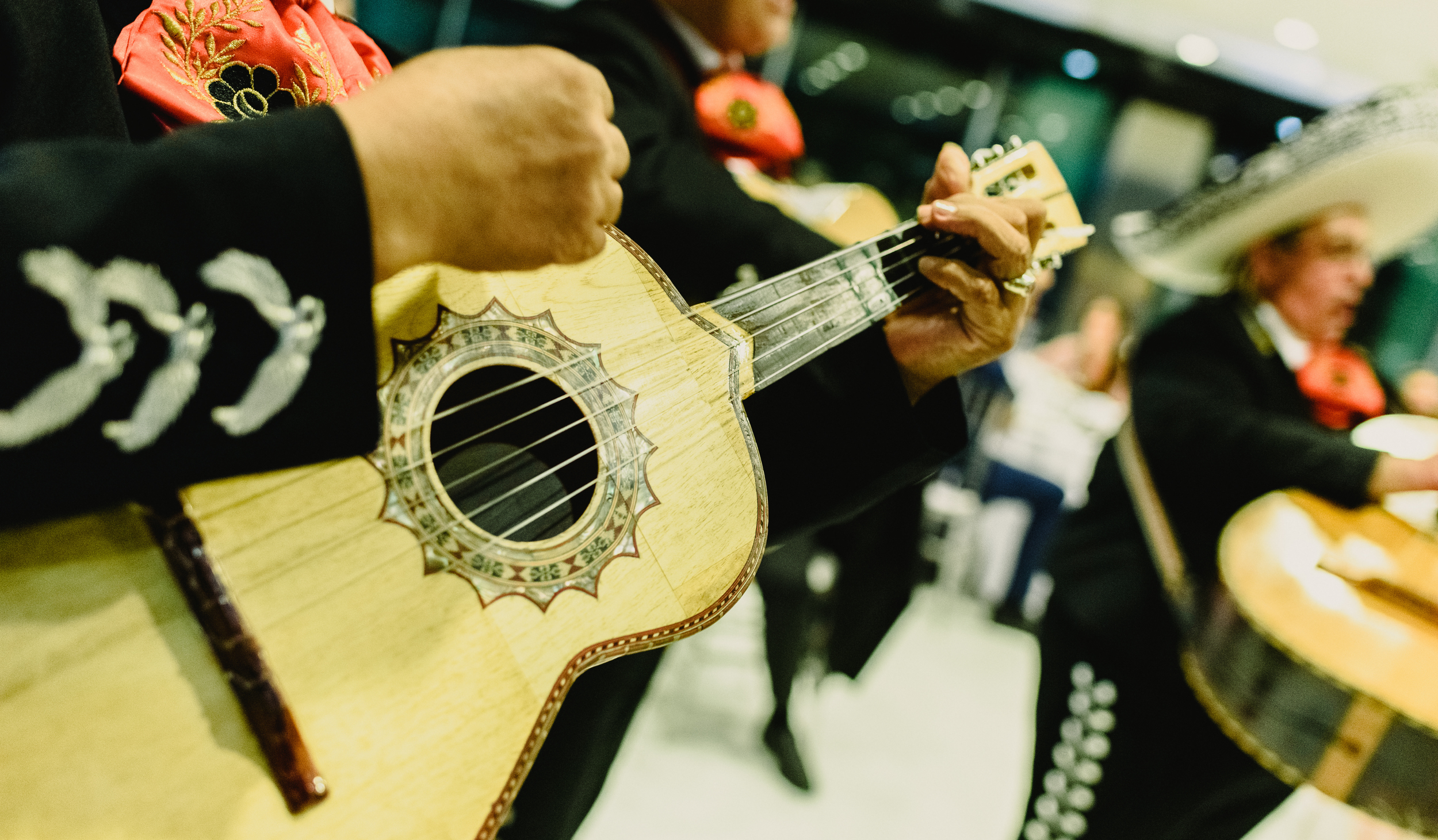
Roving entertainment is live performance delivered by entertainers who move through an event space and interact directly with guests. It replaces a single fixed “show” with short, high-impact moments that happen across tables, queues, foyers, and networking zones. It works by rotating performers through planned areas and timing blocks so energy stays consistent across the venue, especially during arrivals and transitions. Roving entertainment is also called roaming entertainment, walkabout entertainment, and walk-around performers.
Event plans fail when guest energy collapses between formal moments. Roving acts solve that problem by putting performance where people already are.
Instead of asking guests to face a stage, you bring the experience to each cluster of conversation, each quiet corner, and each high-traffic choke point.
Key Takeaways
Roving entertainment uses moving performers and micro-interactions to energise the entire venue, not one viewing area.
The strongest roving programs follow a zone plan, a rotation schedule, and a run sheet timing block.
Different acts serve different objectives: icebreaking, spectacle, elegance, family engagement, or brand activation.
Safety, venue approvals, and crowd density determine what is feasible, especially for fire and height-based acts.
Pricing is driven by performer count, duration, complexity, costuming, technical requirements, and travel.
What Is Roving Entertainment?
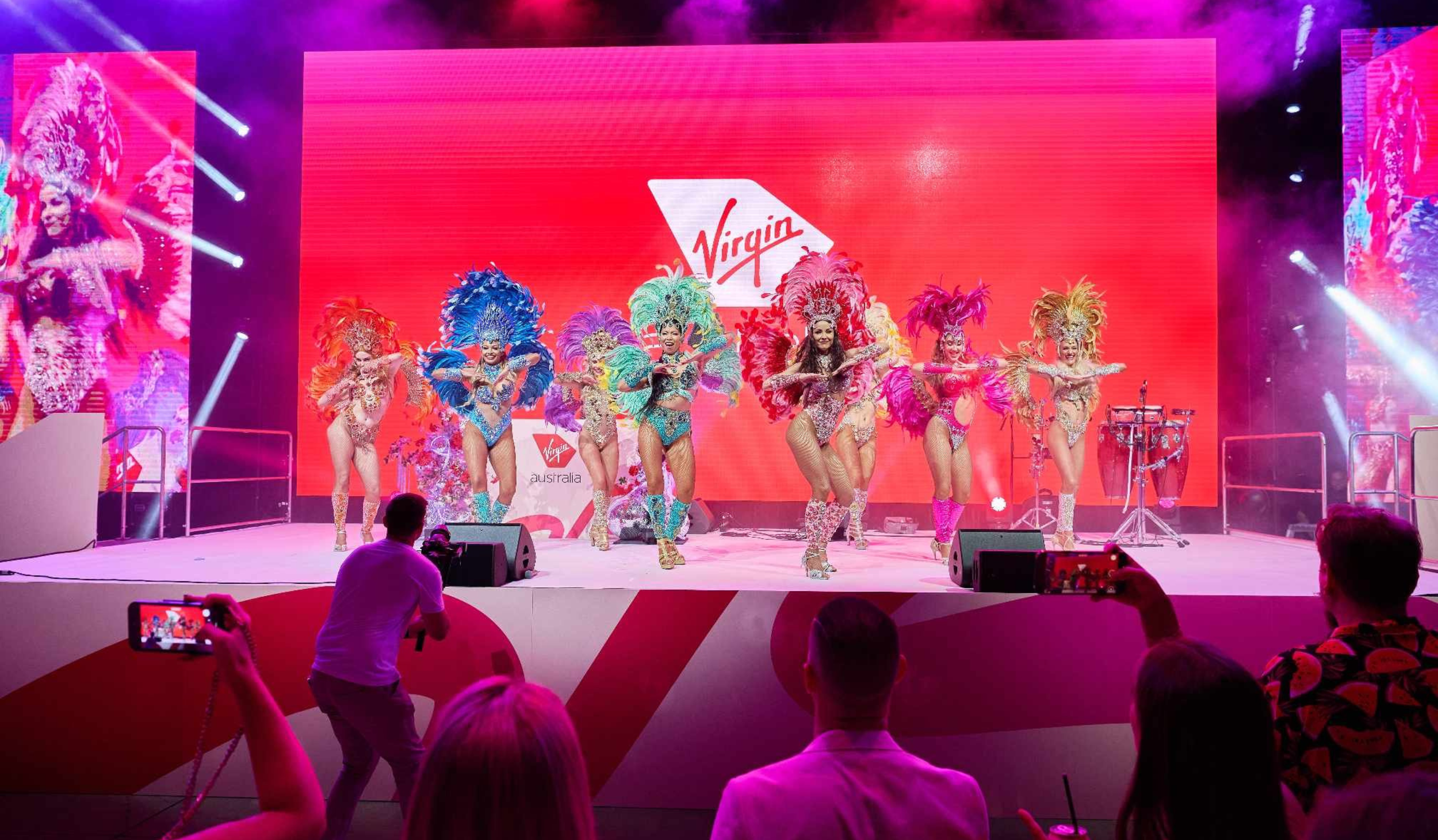
Roving entertainment is a mobile performance format where entertainers circulate through an event and engage guests in short, direct interactions. It uses proximity, conversation, and participation to create impact without pausing the entire event. Roving entertainment fits receptions, cocktail hours, trade shows, festivals, and brand activations because it works in motion and alongside service, networking, and venue flow.
Industry Terms and Common Synonyms
Roving entertainment refers to performers who move through the event space instead of performing from a fixed stage. Common terms include:
Roaming entertainment
Walkabout entertainment
Walk-around performers
Meet-and-greet entertainers
Ambient interactive entertainment
What roving entertainment is not
It is not a staged show where all guests stop and watch one focal point.
It is not background music that never interacts with guests.
It is not an installation that guests must seek out to participate.
A useful way to think about roving entertainment is “distributed performance.” The entire venue becomes the performance area.
How Roving Entertainment Works in Real Events
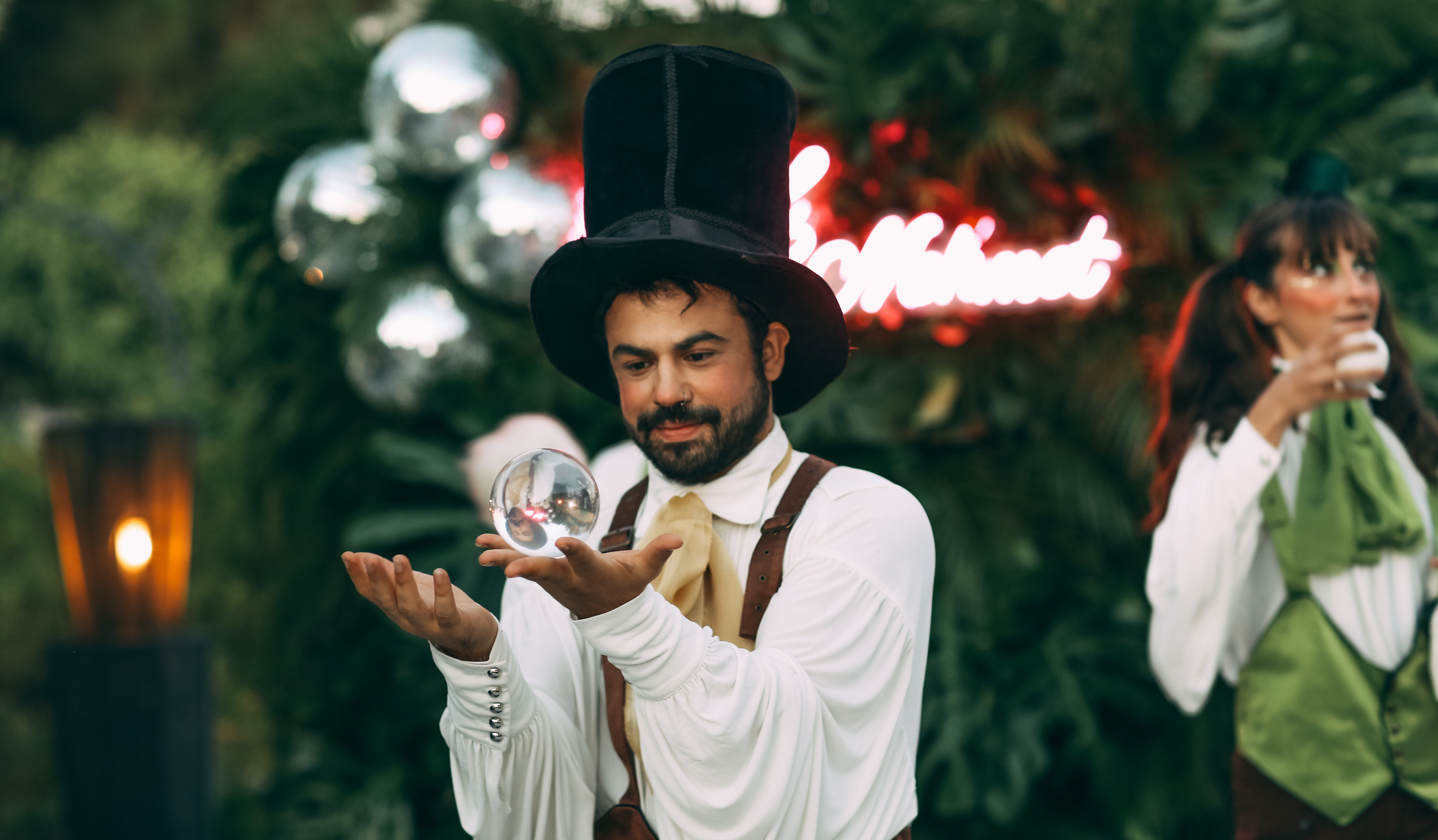
Roving entertainment works through planned movement, repeatable micro-sets, and timed rotations across guest zones. Performers deliver short interactions, then reset and move, which maintains momentum without disrupting catering, speeches, or networking. A strong roving plan is built from three inputs: the venue layout, the run sheet, and the audience profile.
Micro-sets and interaction loops
Most roving formats rely on a repeatable “loop” that can be delivered to one guest or a small cluster:
A close-up magician performs a 2 to 5 minute sequence.
A roaming musician plays a short set while moving between tables.
A character performs a quick bit, photo moment, and playful exchange.
This design matters because it prevents bottlenecks. Guests get a moment, then the performer moves on before a crowd forms.
Zones, routes, and coverage
Roving is most effective when the venue is treated as zones:
Entry and queue
Foyer and registration
Bar and cocktail area
Dining tables
Sponsor booths and expo aisles
Outdoor terrace or spill zones
A coordinator assigns routes so no section stays flat. This is the “mini parade” effect: movement creates visual signals that something is happening, which attracts attention and lifts the room.
Where it fits in a run sheet
Roving acts create the most value in moments that are hard to program with stage entertainment:
Guest arrival and first drink
Cocktail hour and mingling
Room flips and format transitions
Post-dinner lull before dancing or keynote
Trade show traffic gaps between sessions
Festival roaming between programmed stage blocks
Roving works because it supports the event’s timing instead of competing with it.
Roving vs Stage vs Ambient Entertainment
Roving entertainment is the best option when you need coverage, flexibility, and interaction across multiple spaces. Stage acts work well when you want a shared, synchronised audience moment, while formats such as a DJ and live band suit events where music becomes a central part of the guest experience. Ambient entertainment supports atmosphere but does not reliably change guest behavior.
| Format | What guests do | Best for | Limits |
|---|---|---|---|
| Roving | Participate in short moments across zones | Networking, arrivals, transitions, activations | Needs routing and crowd management |
| Stage | Stop and watch one focal performance | Key moments, awards, main show blocks | Creates downtime elsewhere |
| Ambient | Listen and absorb atmosphere | Dining, lounges, premium mood | Low interaction and lower memorability |
Tip: If your goal is venue-wide energy and guest interaction, roving formats usually perform best.
Benefits of Roving Entertainment

Roving entertainment increases engagement by placing performance inside the guest experience rather than outside it. It boosts venue-wide energy because it moves to where attention is needed. It creates shareable moments because guests encounter performance at close range, which triggers photos, video, and conversation.
Benefits mapped to event goals
Networking and icebreaking
Breaks social friction by giving guests a shared topic in the moment.
Helps shy guests participate through low-pressure, small-group interaction.
Energy management across the whole venue
Prevents “dead zones” by rotating attention to quieter areas.
Reduces bottlenecks because entertainment is distributed, not centralised.
Brand recall and content creation
Creates photo-first moments through costumes, characters, and spectacle.
Supports activations by drawing traffic to booths or focal areas.
Run sheet resilience
Fills gaps without needing a reset, seating, or staging change.
Continues while service runs, speeches prep, or rooms transition.
When roving entertainment is not the best fit
Roving entertainment is a poor choice when:
The venue is extremely tight and movement will block service routes.
Noise restrictions prevent interactive performance.
The event requires a single shared moment of attention for messaging.
Safety constraints make key acts infeasible, such as fire in restricted indoor venues.
In those cases, a staged show or a tightly controlled ambient format performs better.
Types of Roving Entertainment (Grouped by Purpose)
Roving entertainment is not one category. It is a delivery method, with different interactive entertainment ideas suited to different audiences, venues, and event goals. The right act depends on your objective, venue constraints, and audience expectations.
1) Welcome and meet-and-greet acts
Examples: costumed hosts, themed characters, living statues, strolling musicians at entry
Best for: arrivals, registration, red carpet, first impressions
Operational notes: requires clear entry routing, photo points, and a quick interaction script
2) Icebreakers for networking
Examples: close-up magicians, improv walkaround, caricature artists, table-side mentalists
Best for: cocktail hour, corporate receptions, sponsor lounges
Operational notes: prioritise consent-based participation and micro-sets that end cleanly
3) High-visual spectacle acts
Examples: stilt walkers, circus roamers, LED performers, drum rovers, roaming dancers
Best for: festivals, large foyers, outdoor spaces, big brand moments
Operational notes: ceiling height, floor surface, and crowd density determine safety and movement speed
4) Elegant ambience with interaction
Examples: roaming violinist, jazz duo that circulates, classical trio moving between rooms
Best for: premium dining, galas, weddings, luxury brand events
Operational notes: requires sound balance, pacing, and coordination with speeches
5) Family-friendly roaming
Examples: balloon artists, bubble artists, puppet performers, comedy characters
Best for: community events, shopping centers, daytime festivals
Operational notes: needs child-safe materials, queue control, and clear boundaries for interaction
6) Brand activation and trade show pull-through
Examples: brand characters, roaming MCs, interactive performers with scripted prompts, product-themed walkabouts
Best for: exhibitions, product launches, retail activations
Operational notes: requires brand briefing, talking points, lead flow plan, and clear handoff to staff
7) Specialty formats that blend service and performance
Examples: living tables, walking trays, themed service characters
Best for: canapés, welcome drinks, premium hospitality zones
Operational notes: must align with RSA-style service requirements where applicable and venue food safety rules
8) High-risk or high-control acts
Examples: fire performers, pyro-style props, large-scale apparatus roamers
Best for: outdoor evening segments with controlled perimeters
Operational notes: venue approval, safety perimeter, fire controls, insurance, and a dedicated risk plan are mandatory
Grouping acts this way makes selection faster and prevents mismatch between theme and logistics.
How to Choose the Right Roving Acts
The right roving entertainment choice comes from aligning event goal, audience profile, venue constraints, and tone. Start with the outcome you want, then select the performance category that produces that outcome reliably.
Step 1: Define the primary objective
Pick one dominant objective:
Increase networking interaction
Create high-impact visual moments
Maintain energy across multiple zones
Deliver elegant atmosphere with live touch
Drive traffic and dwell time for an activation
Step 2: Match the audience and environment
The entertainment format should also reflect how the event develops throughout the day. For corporate functions that move from networking into a more social evening, a live band can create a natural transition into dancing and celebration.
Corporate networking: close-up magic, subtle improv, roaming musicians
Weddings: roaming strings, caricature keepsakes, elegant characters
Festivals: stilt walkers, LED acts, circus roamers, roaming percussion
Trade shows: branded walkabouts that steer foot traffic toward a booth
Step 3: Check feasibility constraints early
Ceiling height and overhead fixtures for stilt walkers and tall costuming
Floor surface and gradients for roaming apparatus and skates
Lighting conditions for LED and projection-based acts
Sound restrictions for roaming bands and percussion
Fire bans and venue policies for flame-based performance
Step 4: Decide how “interactive” you want it to be
Not every event wants full guest participation. You can choose:
Photo-first interaction
Light conversation and playful prompts
Full participation with volunteered guests
This avoids awkward moments and protects brand tone.
Planning and Logistics Checklist
Roving entertainment succeeds when it is treated like event operations, not like a last-minute add-on. The core planning tools are a zone map, a rotation schedule, and a clear brief.
Performer-to-guest ratios that work in practice
Use ratios based on interaction intensity:
Close-up interaction (magic, caricature, table-side): 1 performer per 50 to 100 guests for strong coverage
High-visual roaming (stilts, LED, characters): 1 performer per zone, because visibility carries further
Trade show activations: 1 to 2 roamers per key aisle plus a staffed destination point for conversion
If your event has multiple rooms, plan by zones, not by total headcount.
Venue and routing requirements
Confirm service corridors and keep roaming paths off catering routes.
Assign “reset points” for props, water, and costume maintenance.
Identify choke points and design movement to reduce crowd clustering.
Safety and compliance essentials
Confirm public liability insurance and performer risk documentation.
For fire, require venue approval, controlled perimeter, extinguishing equipment, and a designated safety spotter.
For stilts and apparatus, confirm floor condition, traction, and overhead clearance.
Build an accessibility-aware plan so roaming does not block mobility paths.
Briefing checklist for performers
A short brief improves quality immediately:
Event objective and tone
Brand and dress code requirements
Routes, zones, and timing blocks
Words and topics to avoid
Photo expectations and guest consent approach
Escalation contact for issues on the floor
A 10-minute briefing prevents hours of friction.
Cost and Budgeting: What Drives Pricing
Roving entertainment pricing is determined by labor, skill, duration, complexity, and production requirements. The same act changes cost materially when costuming, technical setup, approvals, and travel change.
Common cost drivers
Number of performers and total contracted hours
Skill level and specialty risk, such as fire, aerial, or technical illusion
Costume build, theming, makeup, and character design
Technical components: LED gear, sound systems, props, batteries, backups
Venue approvals, safety personnel, and risk documentation
Travel, parking, load-in, and rehearsal requirements
How packages are typically structured
A defined roaming window, often split into timed blocks
A set number of performers assigned to zones
Optional add-ons: custom costumes, brand scripting, extra roaming areas, premium props
Quote checklist to keep comparisons fair
Ask each provider to specify:
Performer count and total roaming time
Rotation approach and zone coverage plan
Inclusions: costumes, props, sound, lighting needs
Safety requirements and venue approvals needed
Staffing requirements from your side, such as escorts or spotters
Travel and load-in constraints
This protects your budget and avoids last-minute operational surprises.
FAQs
Do roving performers need a dedicated “base” or backstage area?
Yes. Even fully mobile acts work better with a small base area for water, quick prop resets, battery swaps, costume adjustments, and short breaks. A base reduces downtime and keeps performers circulating smoothly.
Can roving entertainment work during a seated dinner?
Yes. Roving entertainment can run during a seated dinner if it is quiet, table-friendly, and timed between courses. Close-up magic, caricature, and strolling strings work well when performers keep interactions short and avoid blocking service lanes.
Should roving performers interact during speeches or formal program moments?
No. Roving entertainment should pause or relocate during speeches, awards, and key announcements so attention stays on the program. A clean rule is “no roaming in the room” during formal audio moments unless the act is part of the program.
How do you prevent crowding around roving acts?
Crowding is prevented through short micro-sets, consistent movement, and a zone rotation plan. High-visibility acts also need clear pathways and a pace rule so guests watch briefly, take a photo, and then the performer moves on.
Do roving entertainers need microphones or amplified sound?
Usually not. Most roving formats rely on close-range interaction and should stay unamplified to avoid competing with venue audio. If amplification is needed, it should be lightweight and controlled so it does not overpower speeches, music, or conversations.
What venue restrictions commonly affect roving entertainment?
Common restrictions include ceiling height, floor surface, noise limits, crowd density rules, venue policies on flames or props, and required access paths for staff. These restrictions determine which acts are feasible and where they can safely move.
How do you coordinate roving entertainment with photographers and videographers?
Coordination works best when you define “capture moments” on the run sheet. Assign specific time windows and zones where roving acts will concentrate so photographers can anticipate interaction moments without chasing performers across the venue.
What are red flags when booking roving entertainment?
Red flags include vague coverage plans, unclear timing blocks, no discussion of venue constraints, no safety process for higher-risk acts, and no clear plan for crowd management. A professional provider explains routing, rotation, and requirements upfront.
Can you combine roving entertainment with a stage show?
Yes. A strong format is roving during arrivals and transitions, then a stage moment for a shared highlight. This gives you venue-wide energy plus one focal “peak moment” without leaving dead zones.
How far in advance should you book roving entertainment?
Book early for peak dates, large events, and highly specialised acts. Short-lead bookings are possible, but options narrow as you approach the event date, especially if you need themed costuming or multiple performers.
Entertainment That Moves and Engages

Roving entertainment is one of the most flexible ways to add live performance across an event without forcing guests into a single viewing moment. It works best when movement is planned, interactions are built as short loops, and performers are scheduled to support arrivals, mingling, and transitions.
If you are building a roving program, start with three decisions: your event objective, the venue zones that need energy, and the interaction level your audience will enjoy. From there, choose acts that fit your constraints and create a rotation plan that keeps the room consistently alive.
We at Mivida Events and Entertainment can map roving zones, recommend act categories for your run sheet, and design a program that fits your venue and audience across Brisbane, Melbourne, Sydney, Adelaide, Gold Coast, Sunshine Coast, and surrounding regions. Get in touch with us today to plan your roving entertainment.