

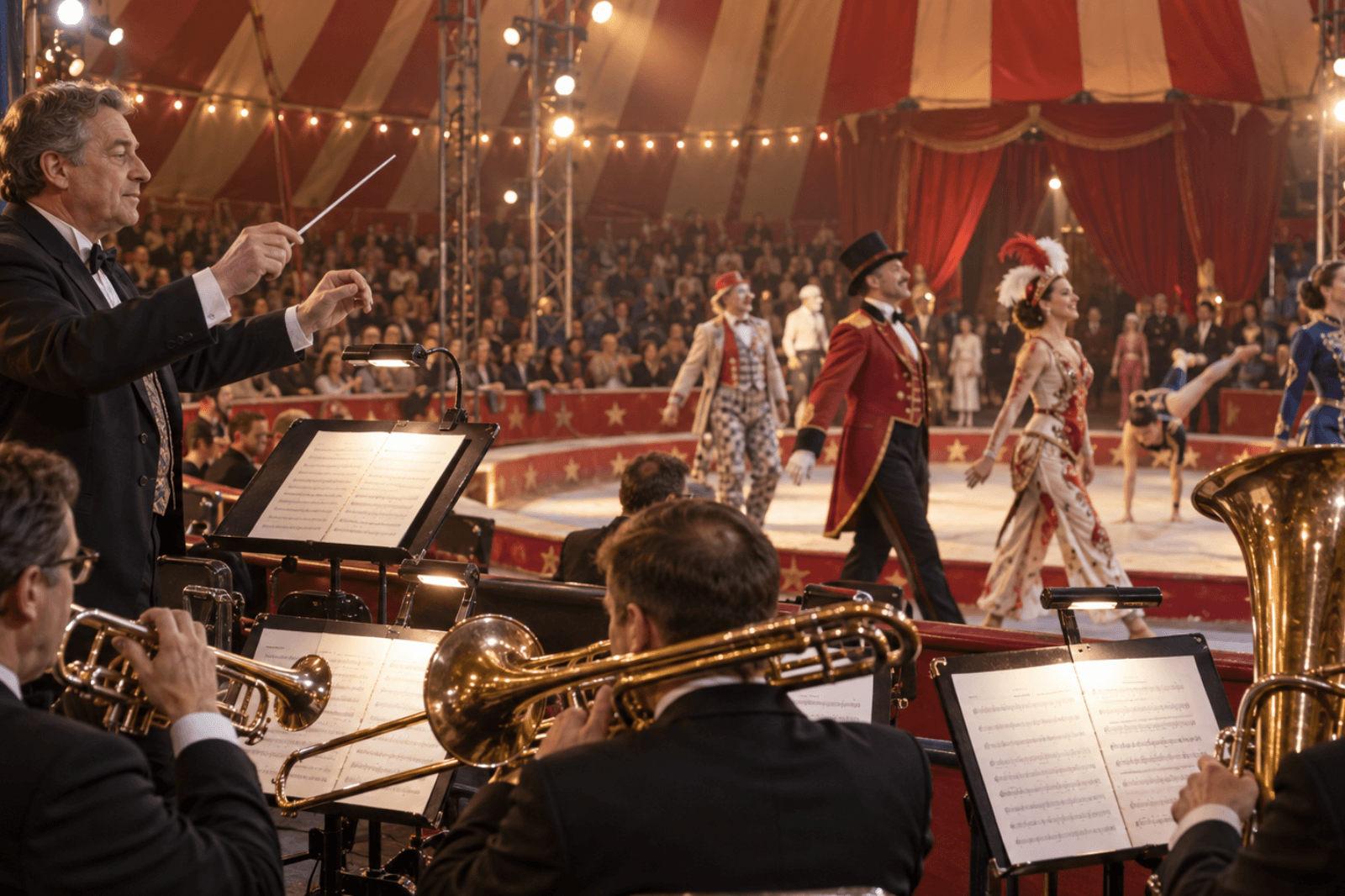
The best-known circus songs are “Entry of the Gladiators”, “Barnum and Bailey’s Favorite”, “The Circus Bee” and “Sobre las olas”, each tied to a different kind of act or moment under the big top. Some were written by working circus musicians, while others became associated with circus performers through their use in live performances.
In Australia, this music travelled with touring shows and now sits alongside original scores for contemporary circus. For events looking to capture that same sense of excitement, Mivida’s live event entertainment brings circus performers and engaging acts directly to the audience.
What to Remember
“Entry of the Gladiators” began as a march and later became associated with clowns.
A “screamer” is a fast march or galop used to drive a lively act.
Circus music also includes lyrical waltzes and songs about performers.
Australian touring circuses carried music across the country, while contemporary companies use live and original scores.
Tempo, rhythm and timbre help a score tell the audience how to feel about an act.
How traditional circus music worked
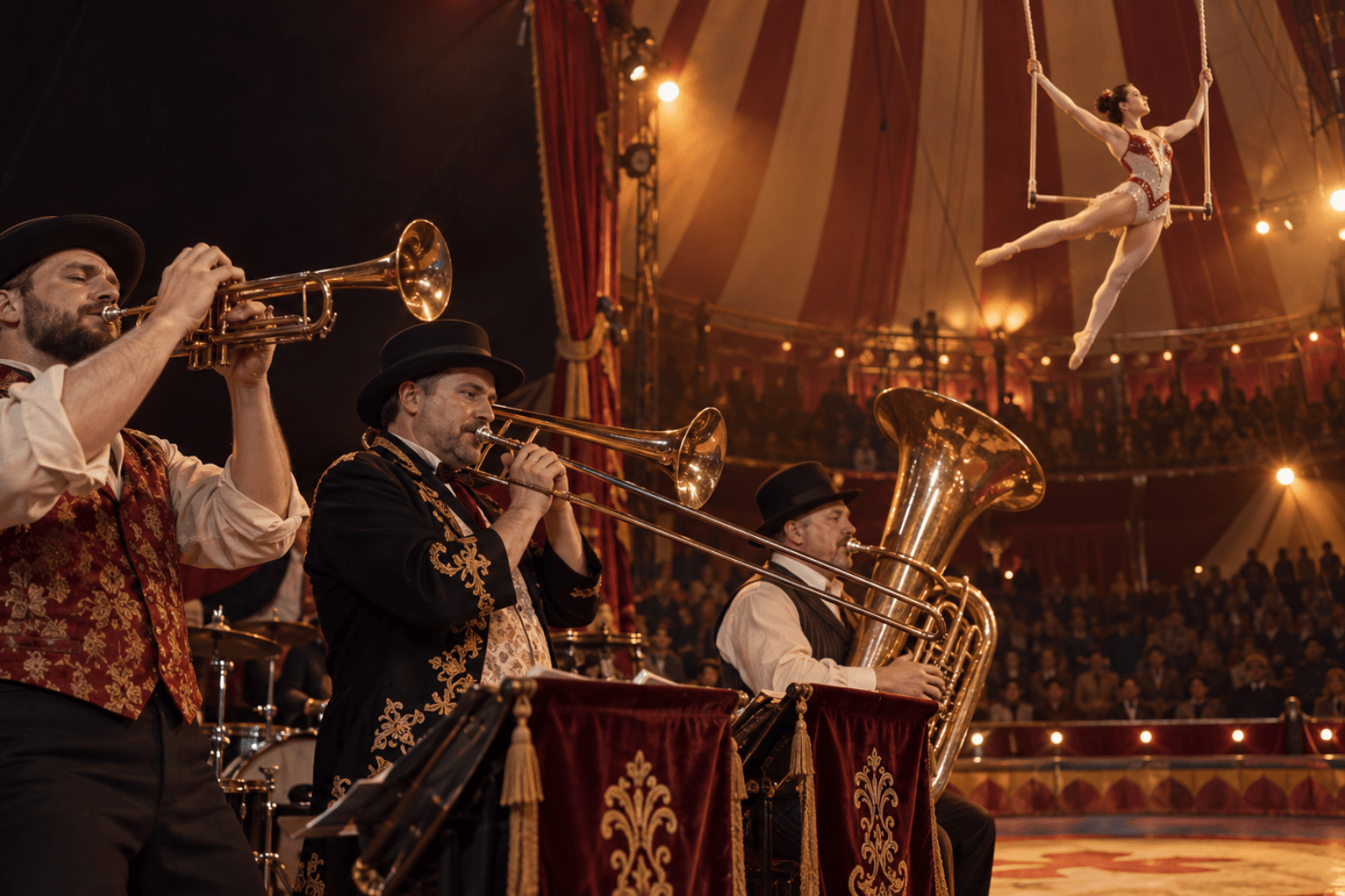
Traditional circus music guides the audience through entrances, fast routines, aerial work and scene changes. Before recorded sound became common, a live band could follow the performers and make the music part of the action. Brass carried clearly across a tent, while percussion sharpened a cue or marked a change in pace.
The band announced processions, filled pauses between acts and helped performers keep time. A bandleader could stretch a phrase during an entrance or close it as a routine landed, keeping the score connected to the action.
Fast marches and galops became known as “screamers”. The term refers to their brisk pace and forceful sound. A screamer could propel a quick sequence, add comic urgency or give a parade a strong pulse. It was one part of a much broader musical vocabulary: circus programmes also used waltzes, polkas, overtures, ragtime and popular songs.
That range matters. Circus music is not simply loud, fast music for clowns. A measured waltz can make an aerial act seem poised; a bold march can make an entrance feel grand. The music gives spectators a clue about the character of each scene before a performer makes a move.
Famous circus songs and the stories behind them
“Entry of the Gladiators” and “Thunder and Blazes”
Julius Fučík’s “Entry of the Gladiators” is the march most closely associated with circus clowns. Fučík first wrote it as a military march under the title “Grande Marche Chromatique”. A later, faster band arrangement circulated as “Thunder and Blazes”, a name that became closely linked with its circus use. The piece’s original purpose and its later reputation are different chapters in the same story.
Its quick pulse, bright brass and tightly repeated phrases make the tune easy to recognise. Those qualities also made it useful as a screamer: the band could lift the pace of a scene almost at once. As circuses used it for comic entrances and clown routines, audiences began to hear the opening bars as shorthand for the big top.
Repeated use changed the tune’s meaning. Many listeners now picture clown routines before recognising it as a march, an association built by performers, bands and audiences over time.
“Barnum and Bailey’s Favorite”
Karl L. King wrote “Barnum and Bailey’s Favorite” from the perspective of a working circus musician. King played in circus bands, and bandmaster Ned Brill asked him to write a march for the Barnum and Bailey ensemble. Its full brass sound and confident beat give it the scale of a grand entrance.
King understood the practical demands of circus performance: music had to carry in a large space, support a moving act and stay clear amid noise. His experience helped him write a march built for the ring.
“The Circus Bee”
Henry Fillmore named “The Circus Bee” after an imaginary circus newspaper. Fillmore had toured with a circus, and the march’s quick, bright character reflects the energy associated with that world. Bands often play it as a screamer, with a driving rhythm suited to a fast routine or a concert programme.
The invented newspaper gives the title a touch of backstage humour. It also hints at how circus music draws on the life around the performance, not only the act itself. A name can evoke the bustle of a travelling show before the first note sounds.
“Sobre las olas” (“Over the Waves”)
“Sobre las olas”, also called “Over the Waves”, is a waltz by Mexican composer Juventino Rosas that became associated with trapeze acts. Its lilting three-beat rhythm has a graceful sway, making it a natural contrast to the sharp pace of a screamer.
The waltz does not try to copy every turn or catch. Instead, it shapes the audience’s sense of movement. A sustained melody can make a swing across the tent feel expansive; a returning phrase can add a sense of balance and anticipation. The same tune has circulated in concert, dance and circus settings, showing how a piece can gather new associations as it moves between audiences.
“The Daring Young Man on the Flying Trapeze”
“The Daring Young Man on the Flying Trapeze” is a vocal song inspired by aerialist Jules Léotard. Unlike an instrumental cue, it puts the performer at the centre of the story and carries the image of the flying trapeze beyond the ring.
This is one reason “circus songs” can mean different things. Some listeners are thinking of band music heard during an act; others mean songs with lyrics about performers, travelling shows or life under the canvas. The trapeze song belongs to the second tradition, while “Sobre las olas” is an instrumental waltz associated with the same kind of spectacle.
“Souvenir de Cirque Renz”
“Souvenir de Cirque Renz” is a fast xylophone galop by Gustav Peter, associated with the German circus Renz. Its crisp, nimble notes stand apart from the brass-heavy marches many listeners picture first and add a playful sense of motion.
The piece illustrates the range of circus repertoire. A circus score could feature a solo instrument, an ensemble march or a popular song, depending on the act and the effect the band wanted. The familiar “circus sound” is therefore a collection of musical choices rather than one fixed style.
Circus music in Australia
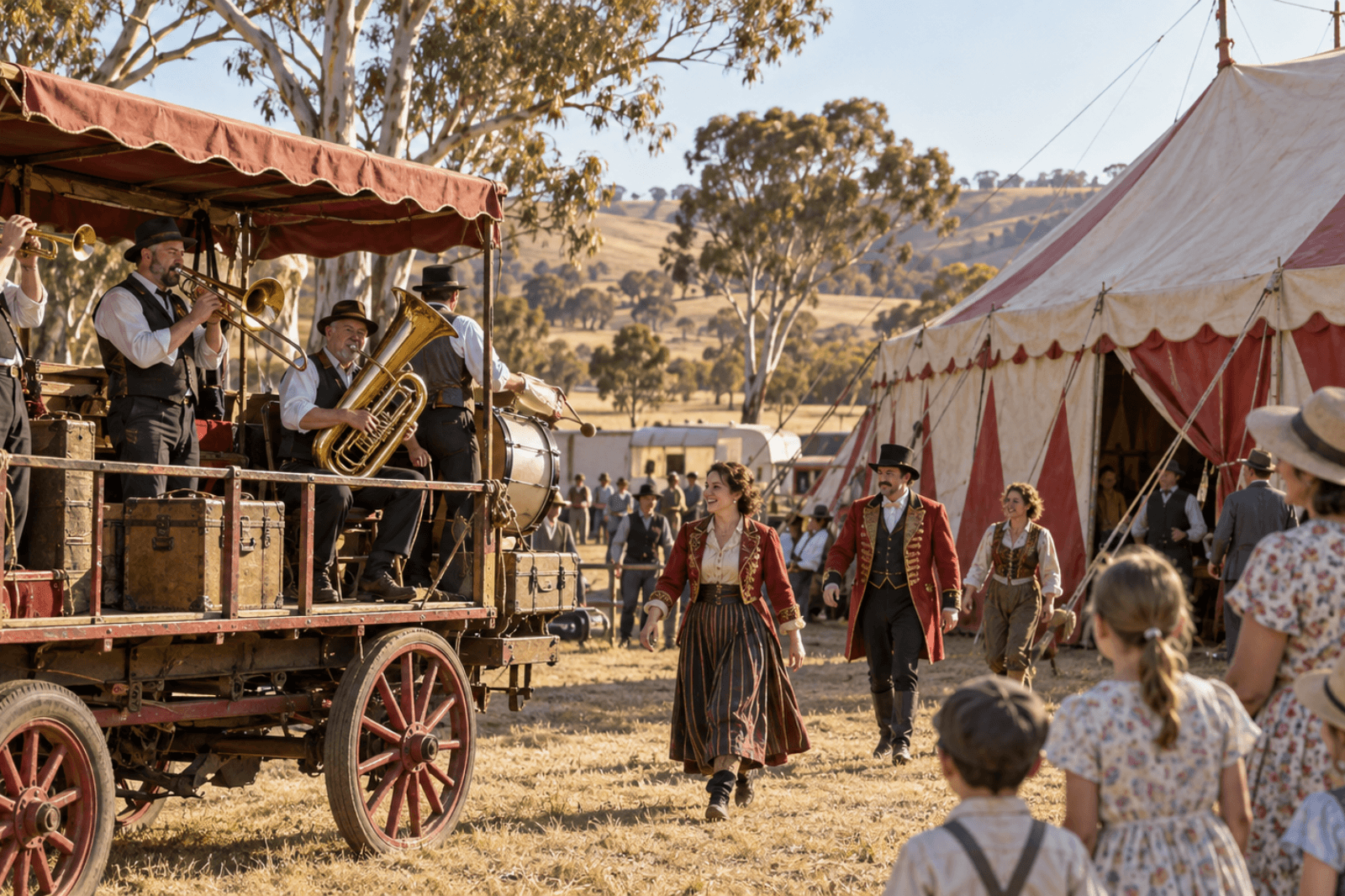
Australian circus music travelled with the touring companies that brought performances to towns and cities across the country. Wirth’s Circus became part of that tradition, carrying performers, equipment and music from place to place. Archival footage preserves glimpses of music-making within the Wirth family and its shows, adding a local layer to the international marches and waltzes heard in circus rings.
The band helped turn a travelling show into a public occasion. Music announced the circus, drew people towards the performance and connected separate acts into one programme. Its sound became part of the event’s identity, alongside the tent, costumes and ring.
Australian circus has also developed well beyond the traditional big top. Contemporary companies combine acrobatics, comedy, theatre and live music, often creating a score around a production’s particular mood or story. Circus Oz, for example, has featured musicians as part of its onstage performance. This approach keeps the old relationship between movement and music while giving each work its own sound.
The connection between circus and event entertainment continues in a different setting. This format lets performers mingle with guests, making the venue part of the performance rather than keeping the action on a stage.
How to recognise the sound of circus music
You can often identify a circus piece by listening to its pulse, instrumentation and relationship to the act. A regular, forward-moving beat usually points to a march. A faster, more urgent version may be a screamer or galop. A lilting triple rhythm suggests a waltz, while lyrics about an aerialist or travelling show place a piece in the circus song tradition.
Brass is prominent in many classic circus marches because it can sound bold and carry across a large performance space. Percussion adds punctuation. A xylophone can make a galop feel light and nimble, while a sustained melody can leave more room for a slower routine.
Repetition also does important work. A tune that returns in a familiar pattern helps an audience grasp the pace of a scene quickly. When a song appears repeatedly alongside the same kind of act, the association becomes stronger. That is how a march written for one purpose can later suggest clowns to listeners who have never seen the original score.
Circus music in modern events
Modern circus scores can use live musicians, recorded tracks or a blend of both. Live music gives performers room to adjust timing in the moment. A recorded track offers consistent cues for tightly choreographed sequences. Some productions move between the two, using a score to shape the whole story rather than assigning one tune to each act.
The same principle helps when choosing performers for a celebration or corporate function. Music and movement can welcome guests, create a lively focal point or encourage people to interact with the event space. Mivida profiles interactive event performers who bring movement and interaction to an event.
For organisers, the most useful question is not simply which song sounds “circusy”. Consider the mood you want guests to feel and how the music fits the occasion. If you're planning a circus party on a budget, familiar circus tunes can help create the atmosphere without spending much on entertainment. The music and performers work best when they suit the event’s pace and layout. Choosing among unique corporate event venues in Australia can help shape that experience.
Why Circus Music Lives On
Circus songs last because they make movement feel like a story. A brass march can turn an entrance into an occasion; a waltz can give an aerial act a graceful arc; a fast galop can send a routine into a blur. Each tune also carries the choices of the musicians and performers who gave it meaning.
At Mivida, we bring events to life with performers who turn a room full of guests into part of the occasion. Tell us what you are planning, and our team will help you choose entertainment that fits the mood, venue and audience. Enquire with Mivida today to start planning a performance your guests will remember.
Frequently Asked Questions
What is the most famous circus song?
“Entry of the Gladiators” is the best-known circus march and is strongly associated with clown acts. Its faster band arrangement also became known as “Thunder and Blazes”.
Who composed “Entry of the Gladiators”?
Czech composer Julius Fučík wrote the march. Its circus identity developed later, as bands adapted and performed it in the ring.
What is a screamer in circus music?
A screamer is a fast, forceful march or galop used to give a circus scene pace and energy. The term describes the music’s sound and tempo.
What music is traditionally played during trapeze acts?
“Sobre las olas”, or “Over the Waves”, is a waltz long associated with trapeze acts. Its flowing rhythm contrasts with the brisk pulse of a circus march.
Was “Entry of the Gladiators” written for clowns?
No. Fučík composed it as a military march. Its connection with clowns came from later circus performance.
What is the difference between circus music and a circus song?
Circus music includes instrumental pieces such as marches, galops and waltzes, as well as songs with lyrics. “The Daring Young Man on the Flying Trapeze” is a vocal song, while “The Circus Bee” is an instrumental march.